Nordpump · Nordic heat-pump manufacturer
Anonymized stand-in brand for a real industrial product company. Eight systems shipped, four scoped on the roadmap below. All names and data on the screens are synthetic.
 anonymized demo
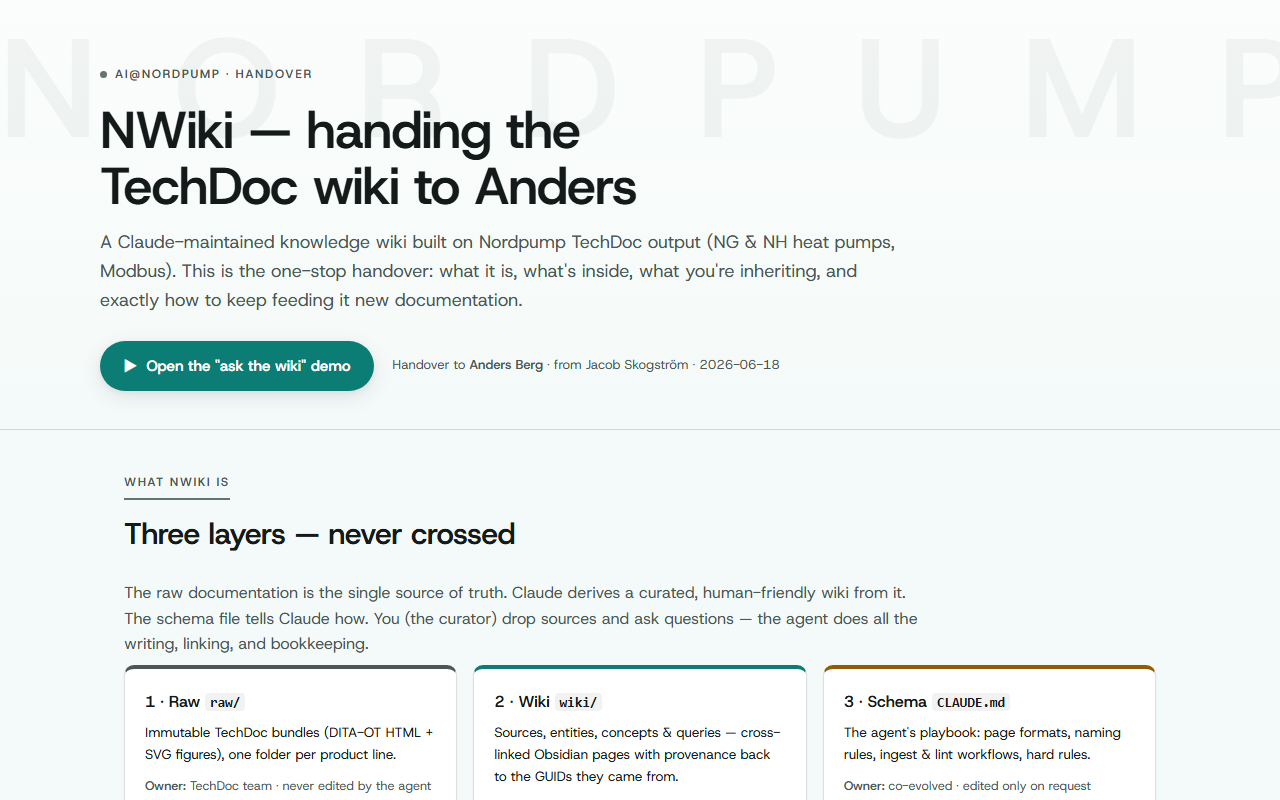
Product Knowledge Wiki
Product knowledge was locked in siloed PDFs nobody could search.
Technical installation manuals and product specs lived as scattered PDFs — hard to search, impossible to cross-reference, not translated.
Institutional product knowledge made searchable, reusable and translation-ready — the backbone every downstream AI project built on.
Turned all documentation into a structured wiki with cross-linked entity and concept pages, embedded technical diagrams, and a bilingual EN/SE terminology set.
“Jacob turned our TechDoc output into a searchable, bilingual wiki. The AI caught template leaks, cut re-publish review time, and surfaced gaps nobody had flagged. Everything we’ve built with AI since rests on that foundation.” Niklas · Technical Documentation Manager
 anonymized demo
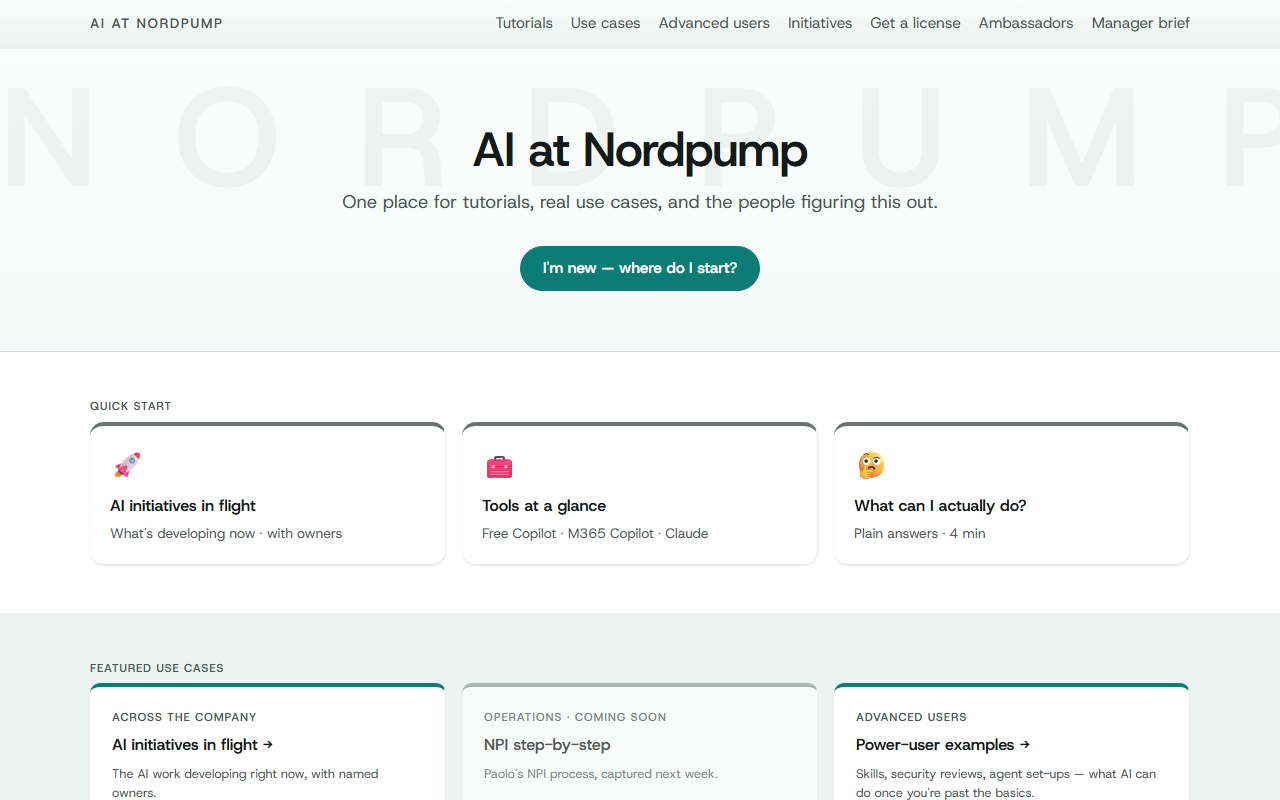
AI Adoption Hub
AI projects were scattered across teams — no governance, no continuity.
No GDPR clearance process, no shared playbook, and no plan for what happens when the AI lead departs.
A repeatable AI adoption playbook and a clean, documented handover — the initiative survives personnel changes.
Ran the AI programme as a tracked project: ambassador programme, GDPR/DPIA clearance guides, an AI setup tutorial on the intranet, and a final deliveries register designed for successor handover.
 anonymized demo
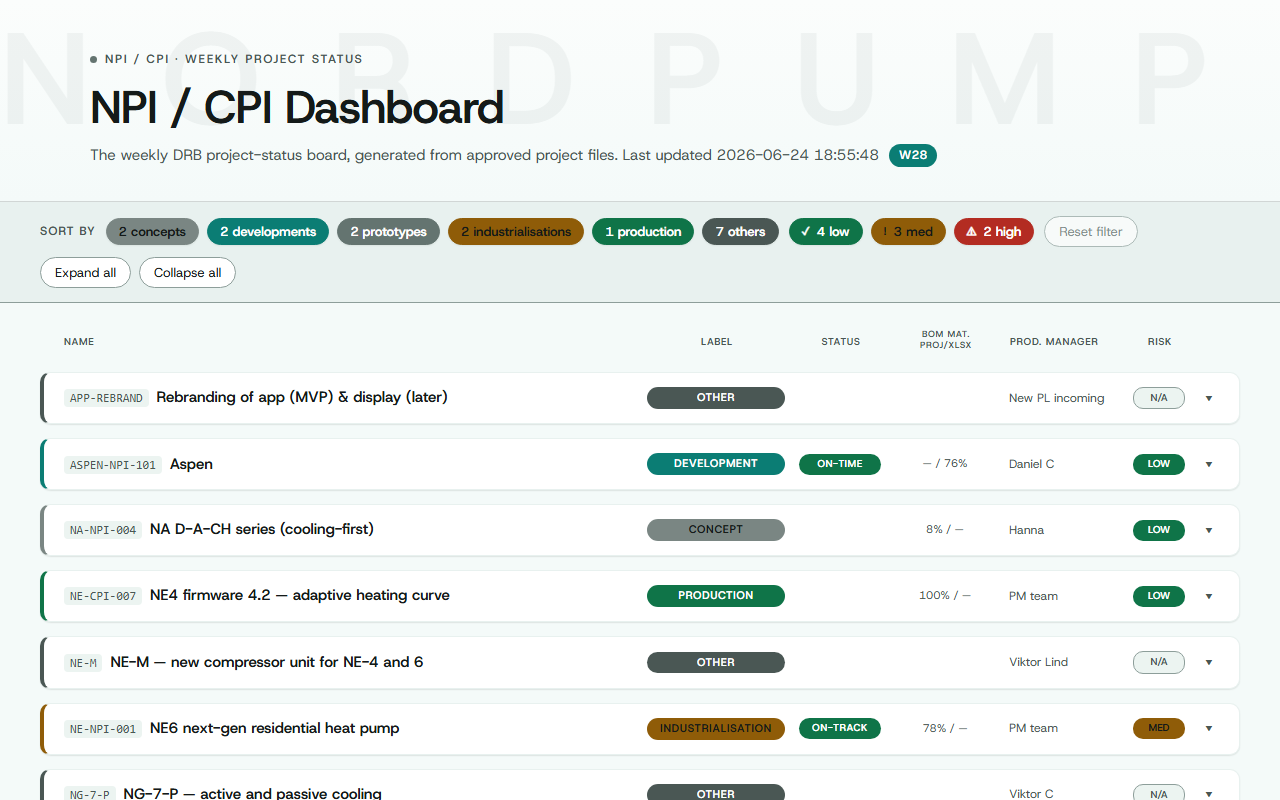
Project Status Dashboard
Project status lived in a fragile Excel only engineers could run.
The portfolio status file was maintained by engineers; PMs couldn’t operate it themselves and the data went stale between updates.
Lower-maintenance, error-resistant status reporting that PM owners operate independently — no engineer in the loop.
Replaced the Excel layer with a static-HTML dashboard generated from flat text files and live issue-tracker cards, designed for non-engineer PM owners. Pure-stdlib render pipeline, full test suite.
 anonymized demo
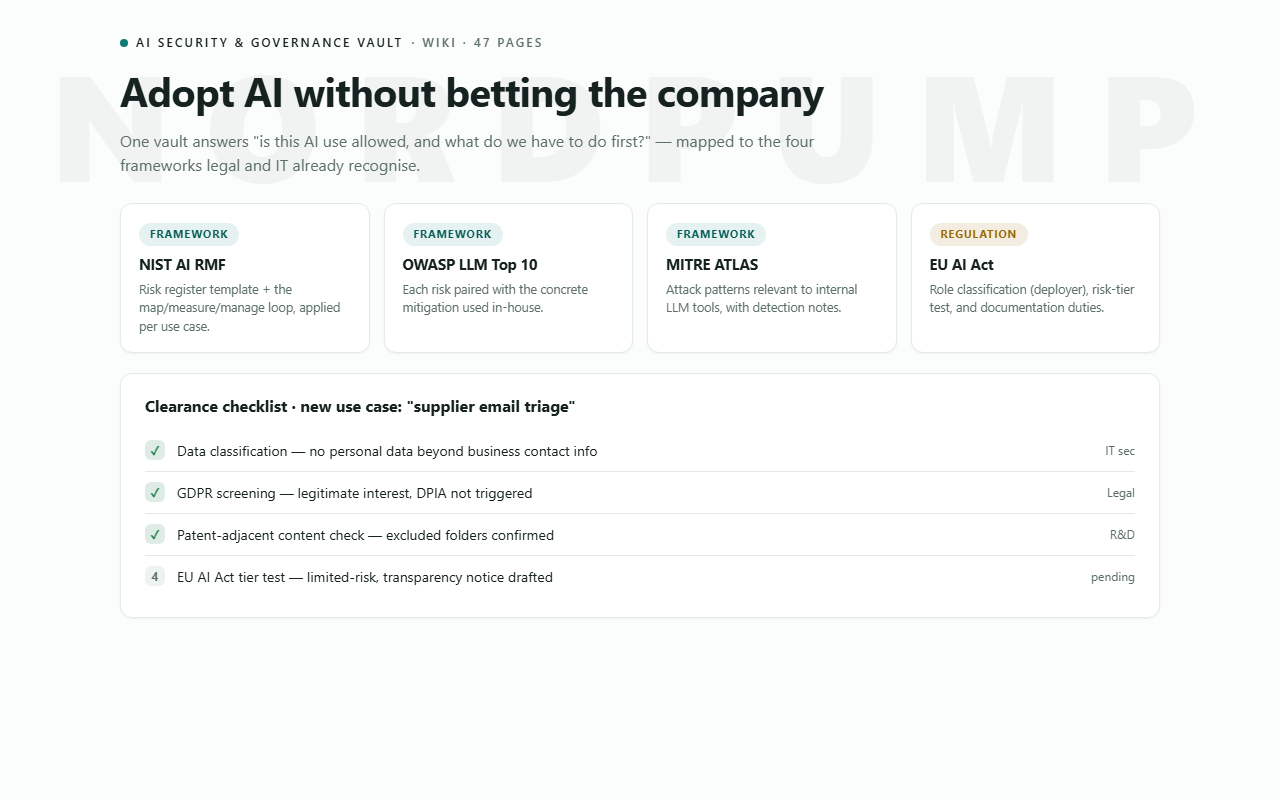
AI Governance Vault
No framework for adopting AI safely with sensitive data.
Compliance risk was undefined for AI use near sensitive or patent-adjacent data — so every use case stalled at “can we even do this?”.
A governance and compliance foundation that enables safe enterprise AI adoption without regulatory exposure.
A compliance wiki aligned to NIST AI RMF, OWASP LLM Top 10, MITRE ATLAS and the EU AI Act — with per-use-case clearance checklists.
 anonymized demo
Support Chatbot
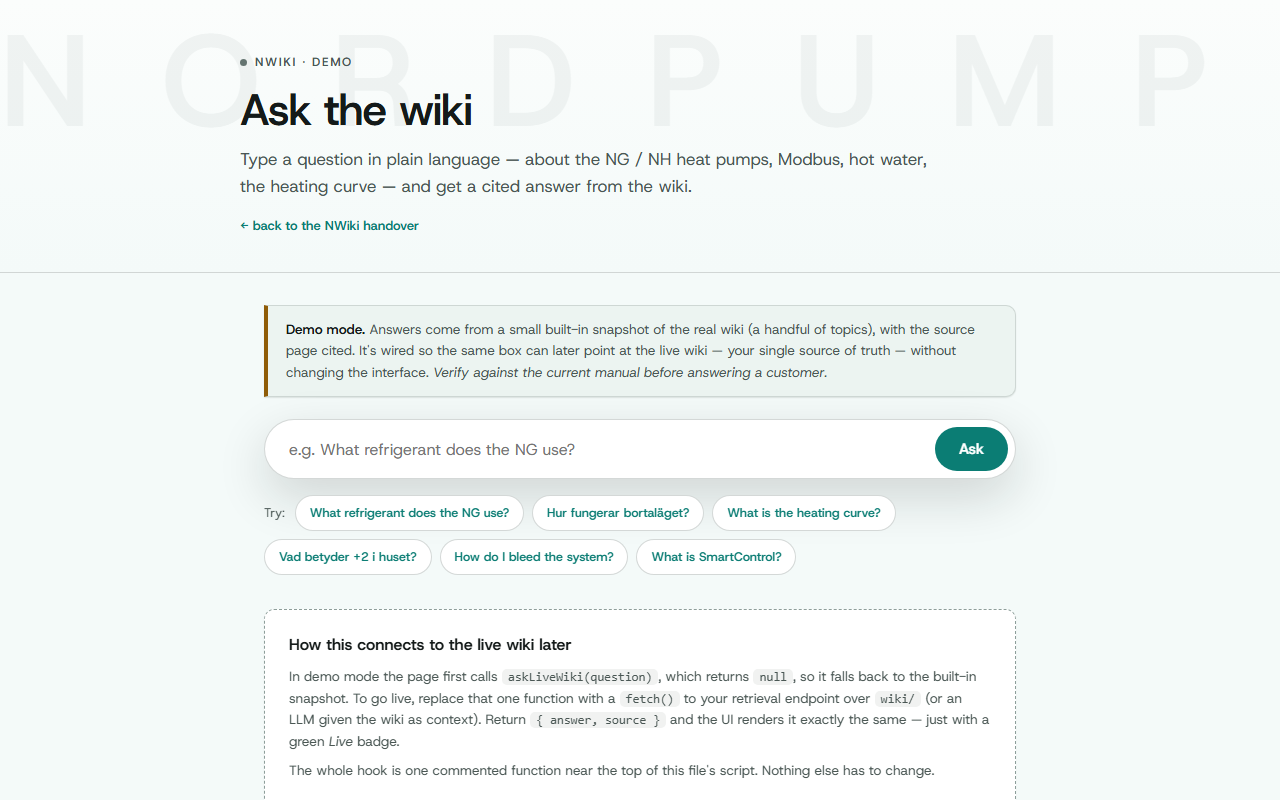
Support spent hours answering questions the docs already answered.
The answers existed in the knowledge base — they just weren’t quickly findable when a customer was waiting on the line.
Proved the knowledge base could power frontline Q&A — a working assistant for support staff from day one, with cited sources.
A Python chatbot answering from the product knowledge base via the Anthropic SDK, with prompt caching holding the full ~180 KB corpus in context.
 anonymized demo
Keyboard-First Onboarding Form
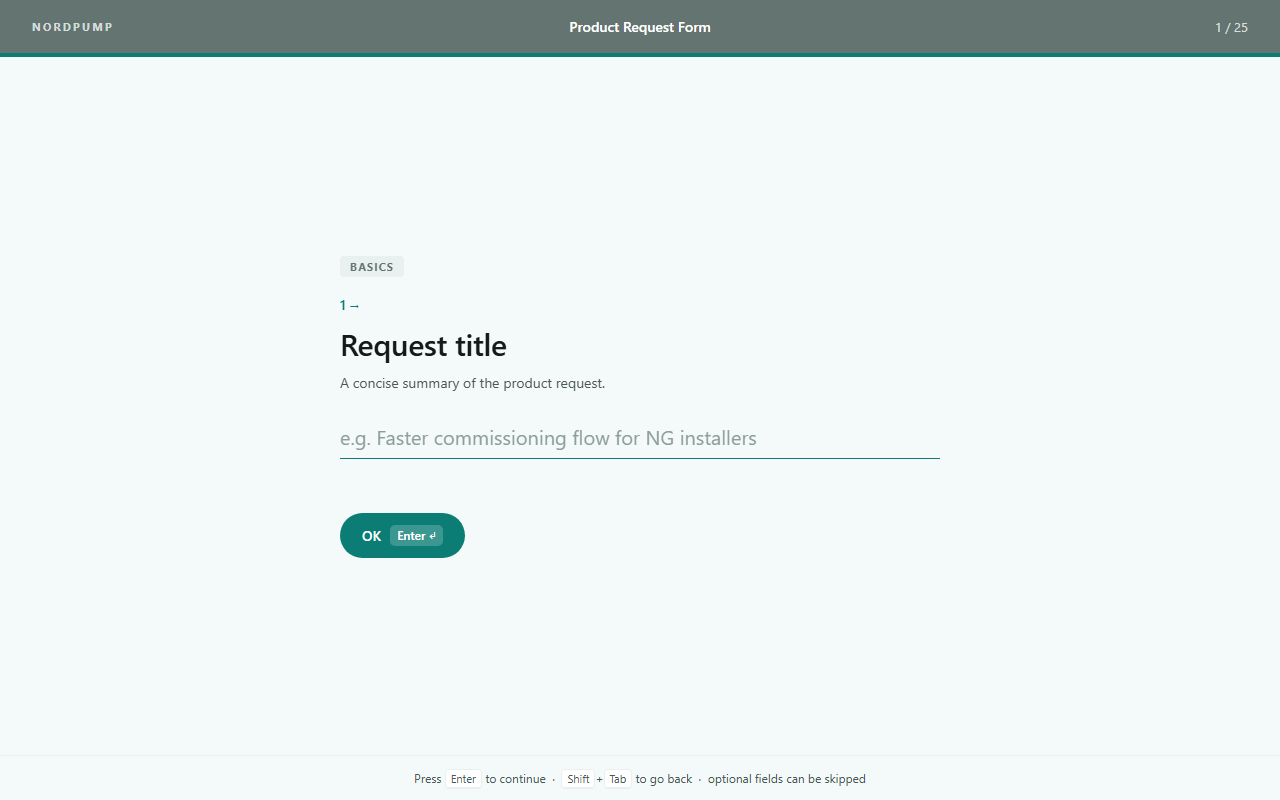
Long, linear onboarding flows lost people before the end.
Friction-heavy intake: long forms, no flow, drop-off before completion.
A reusable UI prototype demonstrating rapid build capability — and a template for future onboarding flows.
A keyboard-first multi-step web form — one question per screen, Enter to continue — Playwright-verified and shipped in a single sprint.
 anonymized demo
Compliance Document Builder
Every engineering compliance document was built from scratch by hand.
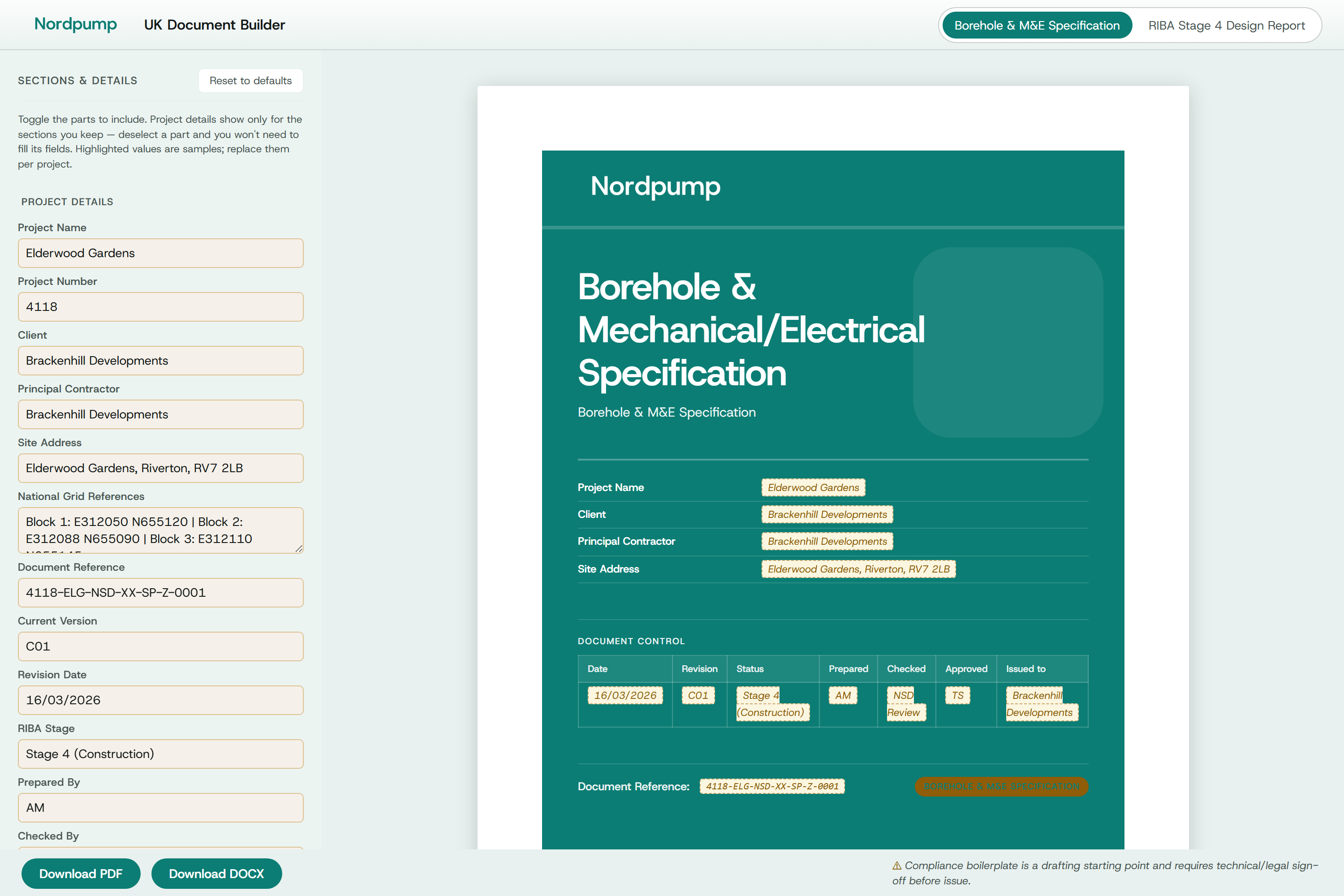
Borehole/M&E specs and RIBA Stage 4 design reports — each one a full day of manual drafting against UK Building Regs, HNTAS and CP1 citations.
A day of drafting collapsed into an hour, with a live preview so nothing is exported until it's actually right.
A browser-based, no-server document builder: pick the document type, toggle the sections a given project needs, edit live, and export straight to PDF or Word.
“Compliance documents used to eat a full day each — Borehole and M&E specs, RIBA Stage 4 reports, all built by hand against UK Building Regs, HNTAS and CP1 citations. Jacob built a tool where I pick the document type, toggle the sections I need, and get a live preview as I go. What took a day now takes an hour, and the export is ready — PDF or Word.” Michael M · Director, Energy Solution Design
 anonymized demo
Sign-in & Hosting Pipeline
Every internal tool needed its own login screen and its own manual deploy.
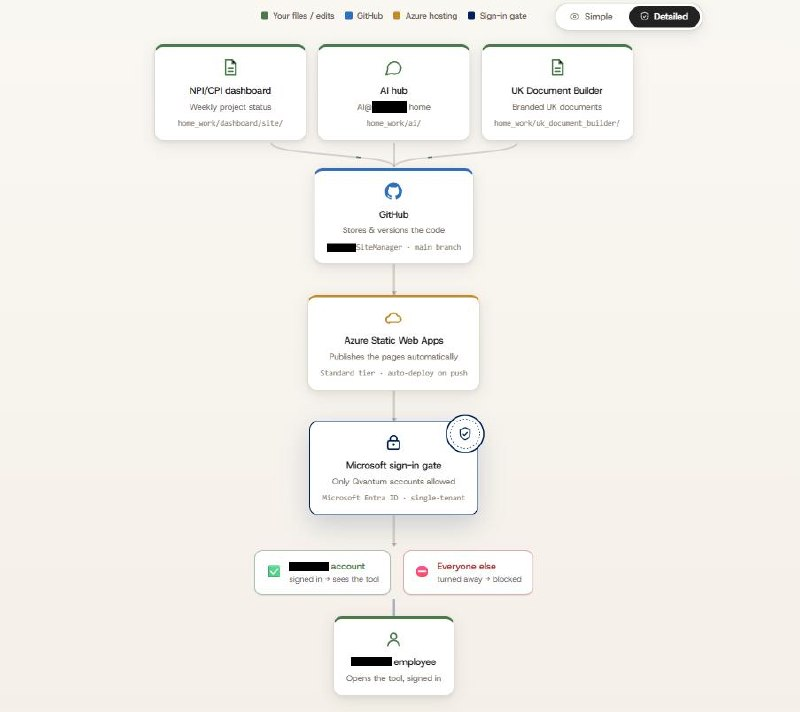
Three internal tools, three ad-hoc ways to keep outsiders out — and every release meant someone manually pushing files to a server.
One sign-in gate for every tool, and every release ships itself — no build servers to babysit, no manual deploy step to forget.
A single-tenant Microsoft Entra ID app registration gating three internal tools — only company accounts pass, everyone else is bounced to sign-in. Paired with a GitHub → Azure Static Web Apps pipeline: push to main, GitHub Actions deploys it automatically, live in 1–2 minutes. Every permission, redirect URI and secret wired end to end.
“Jacob set up single sign-on for three of our internal tools through a proper Microsoft Entra app registration, so only our own company accounts get in. He also built the publishing pipeline — push to GitHub, Azure deploys it automatically, no build servers to babysit. And he got every permission and secret wired correctly so it worked end to end.” Dominic · Revenue Operations Manager
Roadmap
scoped · not yet builtSystems designed and scoped for this customer — concept visuals, not shipped software.
 concept visual
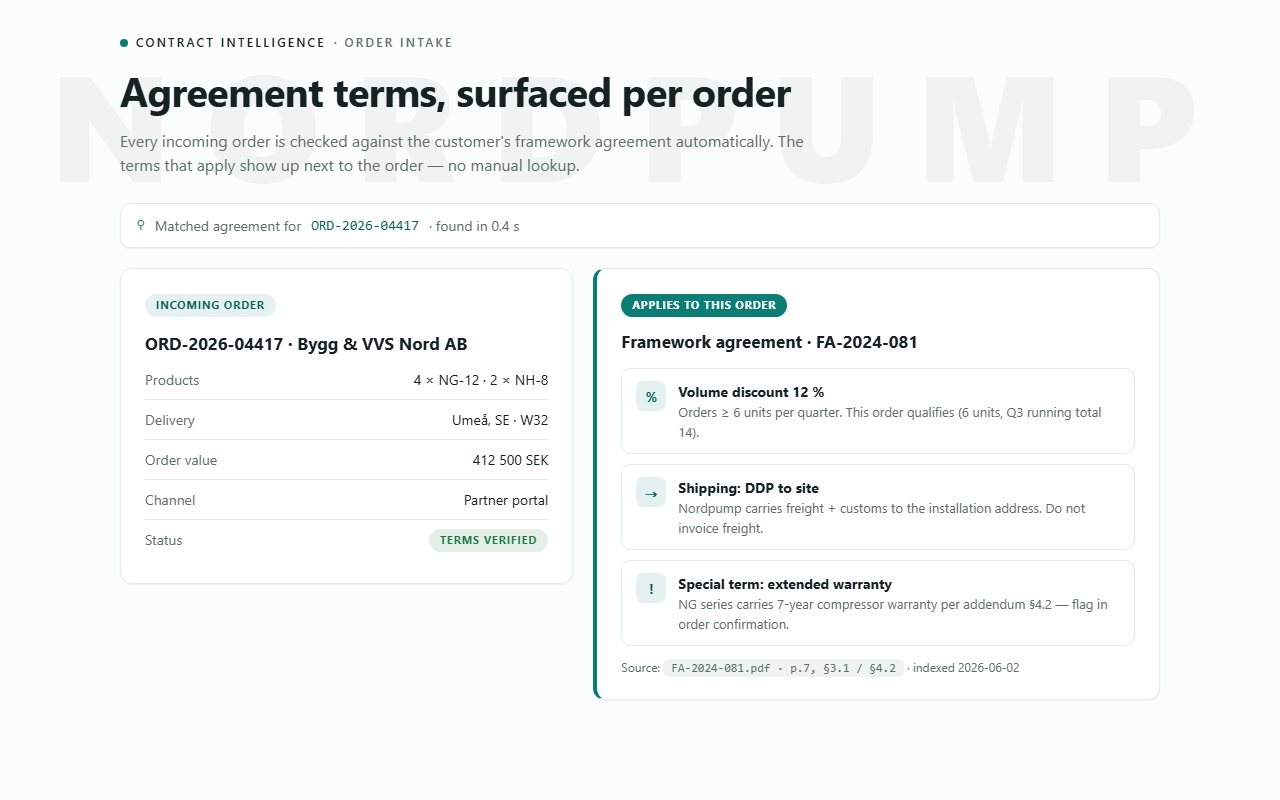
Contract Intelligence
Every order means digging through customer agreements by hand.
Sales ops manually check agreements for each incoming order — shipping rules, discounts, special terms buried in dozens of contracts.
Eliminates slow, error-prone manual lookup — order processing becomes self-correcting, the right terms surface themselves.
Index all customer contracts into a searchable knowledge base; incoming orders auto-query the matching agreement and surface the terms that apply.
 concept visual
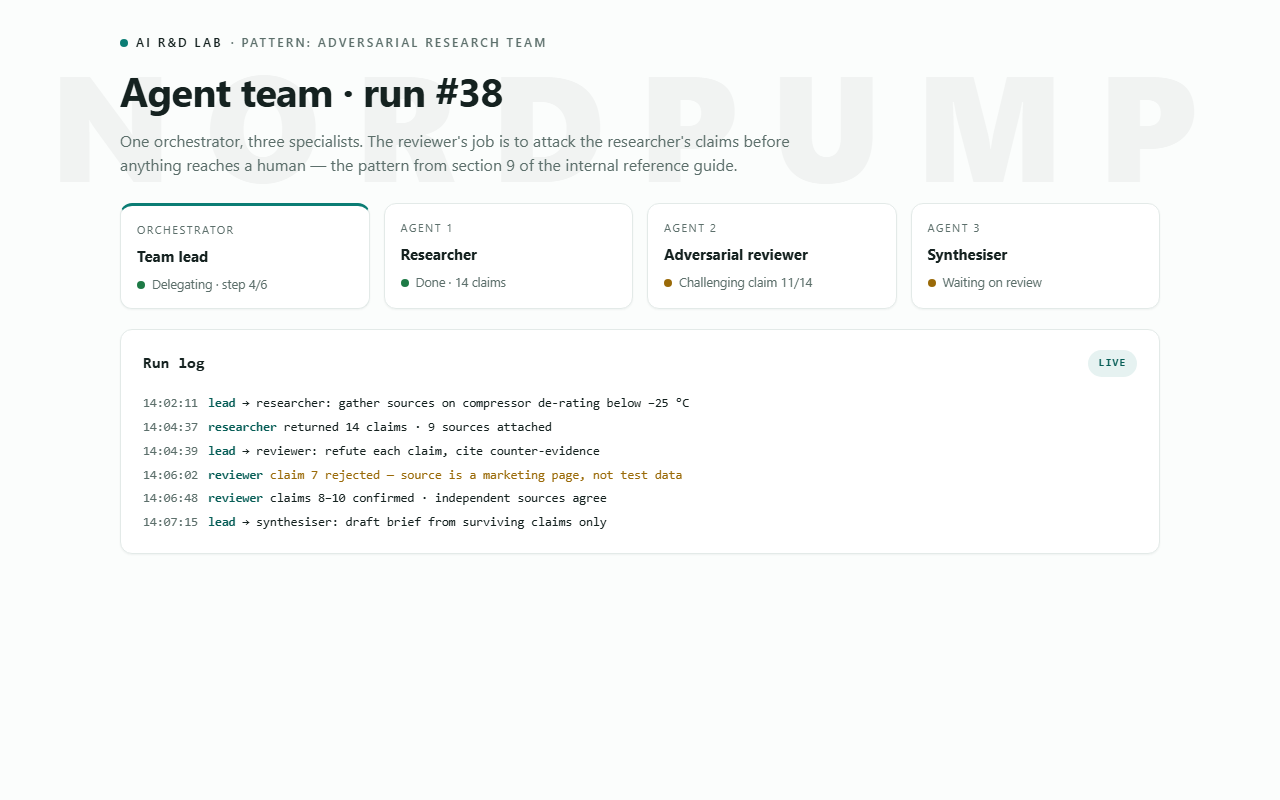
Multi-Agent Patterns Lab
Teams build agent workflows ad-hoc, duplicating effort.
No internal understanding of how to structure AI agent workflows — every team starts from zero and repeats the same mistakes.
Internal capability-building: best-practice patterns teams adopt immediately instead of reinventing them.
Stress-test multi-agent LLM workflows: an internal reference guide, an adversarial research-team pattern, and a demo app built end-to-end by parallel agents.
 concept visual
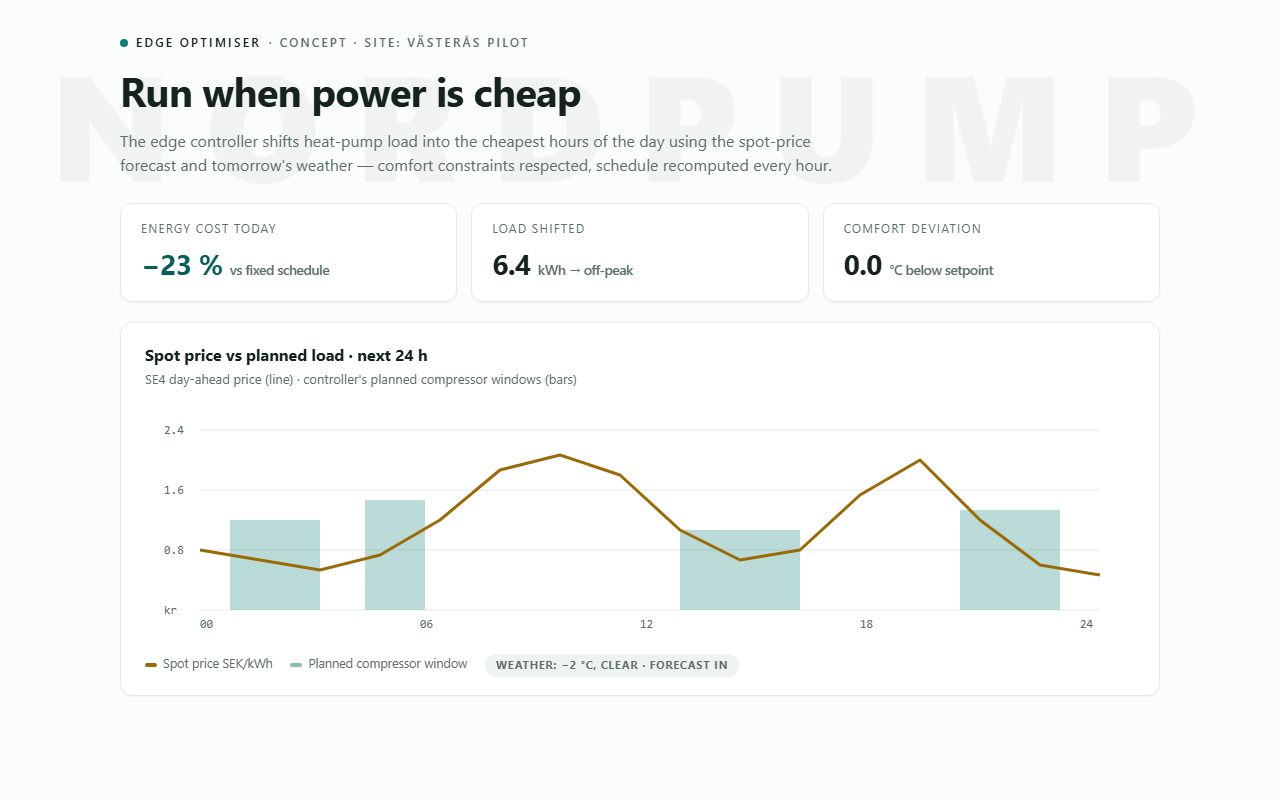
Edge Energy Optimiser
Hardware runs on fixed schedules, blind to electricity prices.
Units ignore live spot prices and weather forecasts — unnecessary energy cost for every installed customer, every day.
An energy-cost differentiator — an innovation concept with engineering questions ready for R&D.
An edge controller that dynamically optimises hardware operation against spot prices and weather: 3-phase roadmap, fieldbus data capture, European rollout plan.
 concept visual
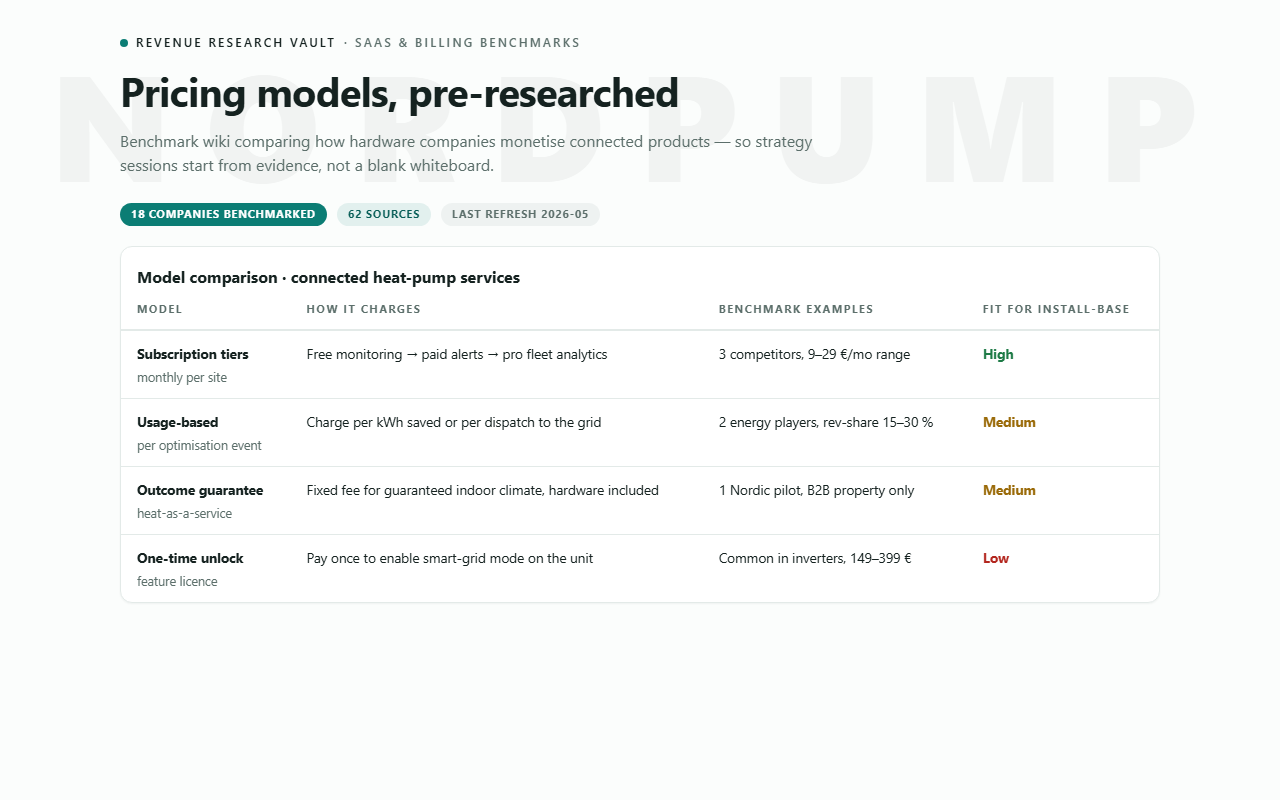
Revenue Benchmark Vault
Every pricing discussion starts from a blank whiteboard.
No structured benchmarks for SaaS billing and revenue models — strategy conversations restart the research each time.
Rapid, reusable research assets that cut preparation time for strategic and pricing discussions.
Structured benchmark wikis on SaaS revenue and billing models for competitive research and pricing decisions.
Want one of these inside your company?
I scope one constraint at a time, build the AI system to remove it, and measure the before/after.
Work with us →