Telling Technology · Learning in public
All episodes TL;DR →
EP.28 — CASES
A consulting portfolio, rebuilt

Most portfolios list tools. Mine shows what changed.

A CV says I know n8n and Claude Code. A proof page says 2–4 h → 0 h. So I built one — five real wins, each with a number you can check.
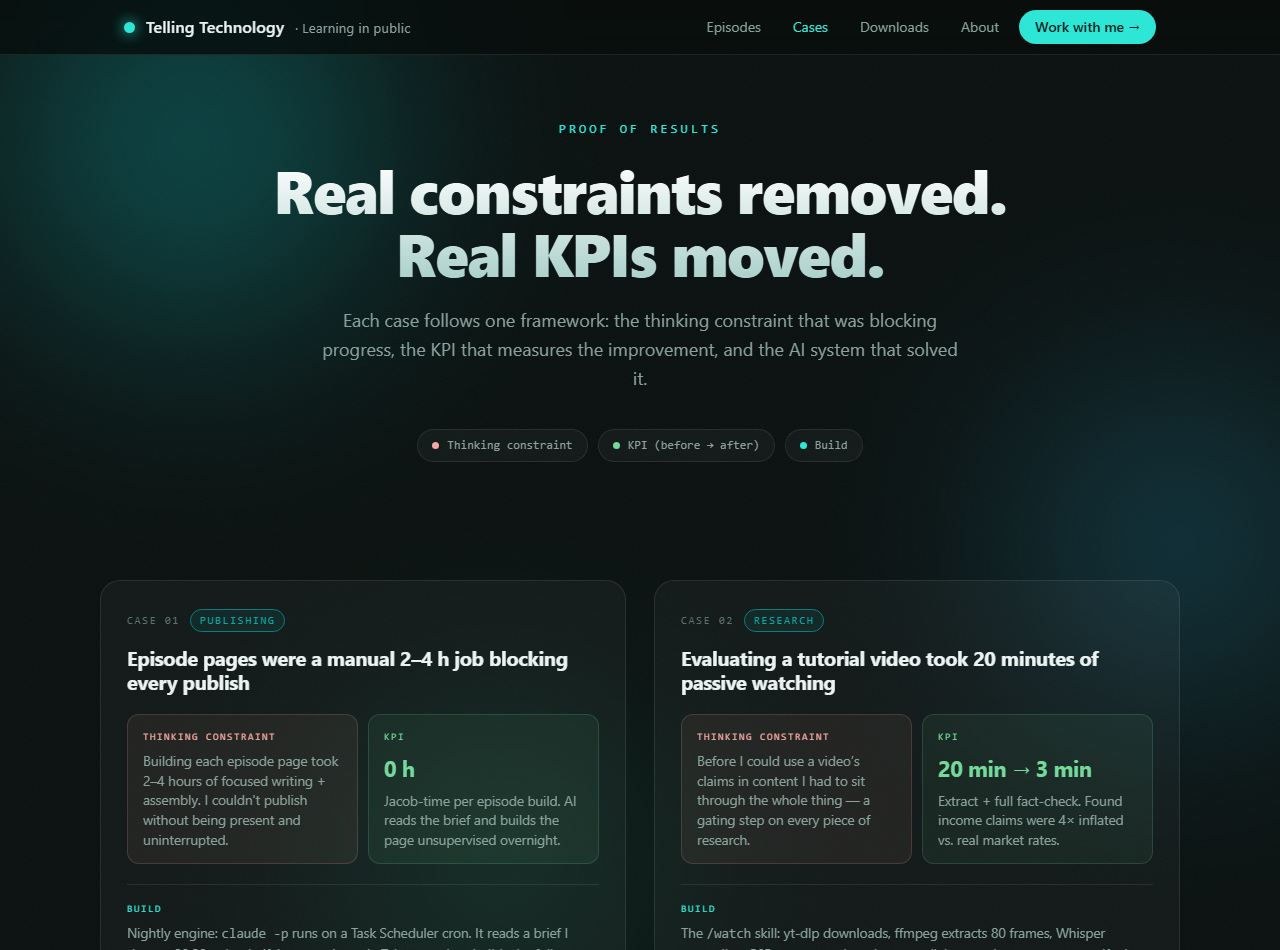
Top of the Cases page: headline 'Real constraints removed. Real KPIs moved.' above the constraint / KPI / build framework legend
⌁ live on the site · /cases · 5 real cases
The problem with every portfolio I've ever read ↓
01 The gap

A list of tools is not a result

Portfolios and LinkedIn profiles list what you touched — frameworks, languages, projects. An employer or a client reads that and still can't see the one thing they're buying: the delta. Did anything actually get faster, cheaper, or safer? By how much? Most pages never say.

claude code — desktop
> my portfolio lists 30 tools and nobody can tell what I actually changed. help me fix the framing.
Stop listing tools. List constraints removed. For each one: what was blocked, the number before, the number after, and the system that moved it. That's the only thing a buyer is reading for.
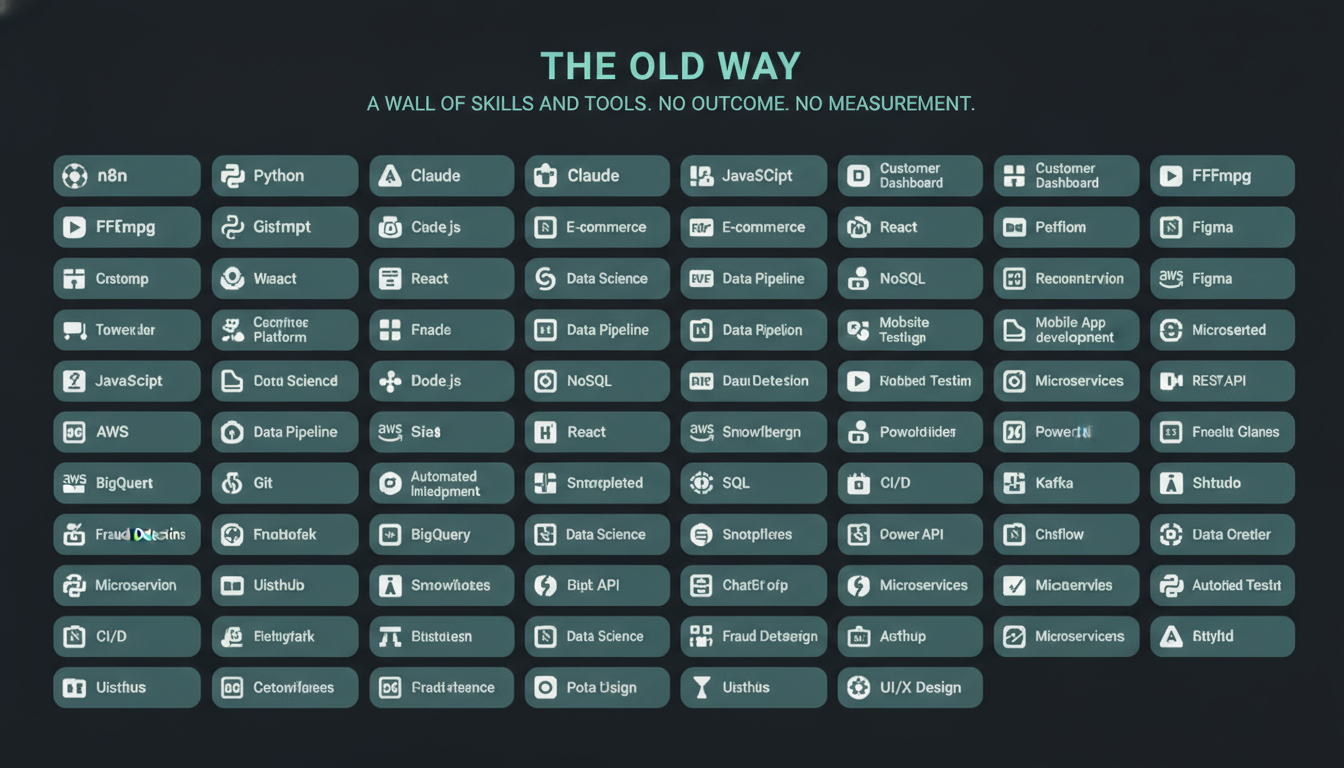
The old way: a generic skills-list portfolio — a wall of tool logos and project names with no measured outcome
the old way
Tools and projects — but no measured before/after
02 The framework

Constraint → KPI → build

I borrowed Nate Herk's three-part structure and made it the spine of the whole page. Every case answers the same three things, in order: the thinking constraint that was blocking progress, the KPI that measures the change (a real number, before → after), and the AI system that removed it. Constraint and KPI first — the build is the proof, not the pitch.

claude code — desktop
> build cases.html — one card per win. each card: constraint panel, KPI panel with the number big, then the build. teal house style.
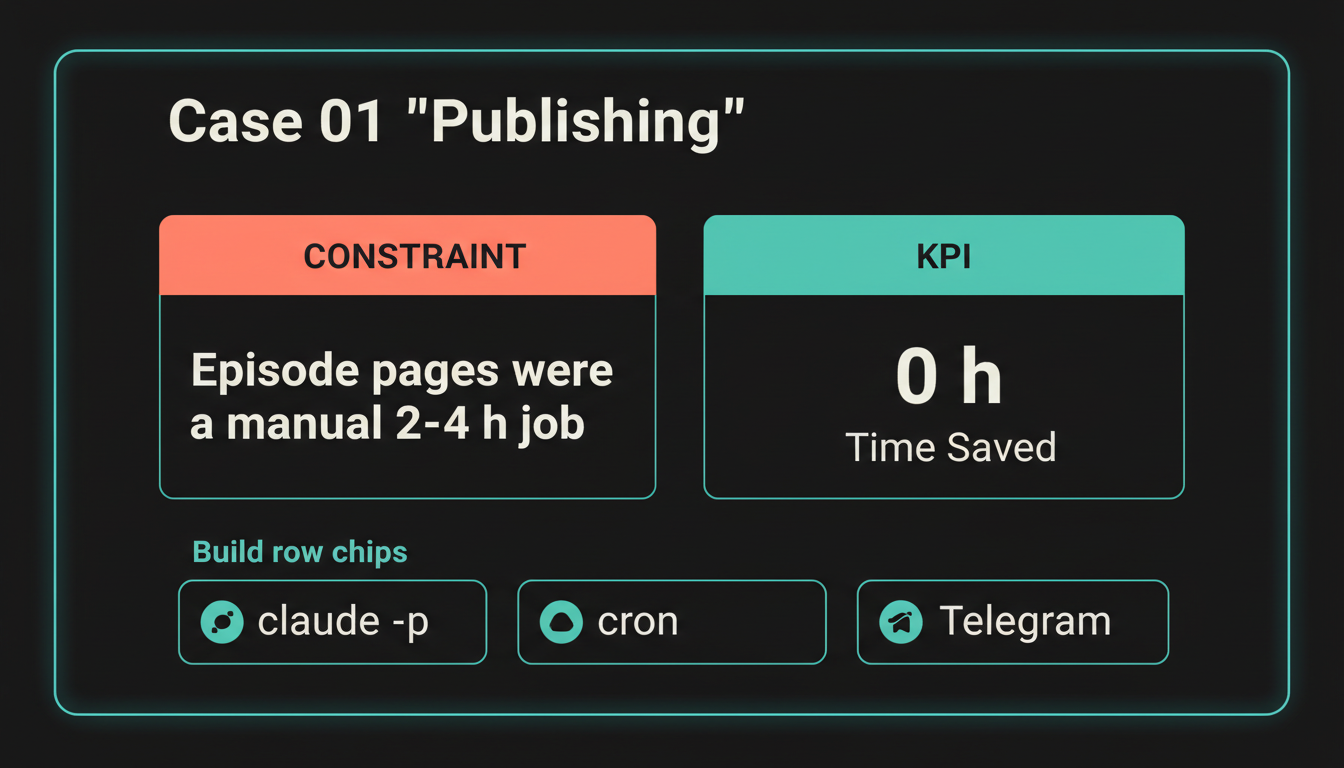
Done — a 2-up grid of case cards. Coral constraint panel, green KPI panel with the headline number, a build row with tech chips, and a legend up top so the structure reads at a glance.
The Cases page legend: three pills — thinking constraint, KPI before to after, build
the framework
Three pills set the contract every card keeps
03 The proof

Five wins, five numbers

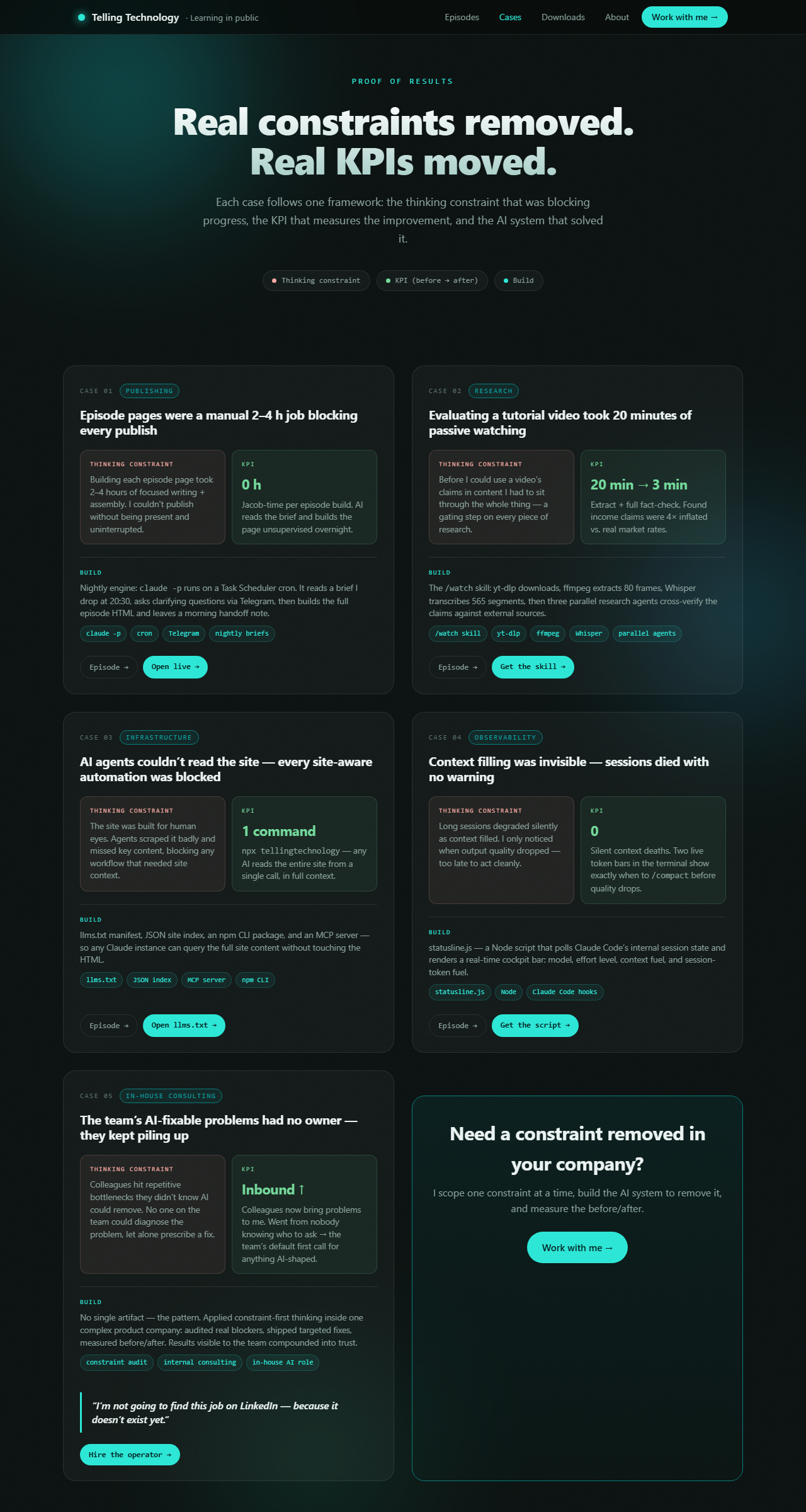
Every case on the page is a system shown in an earlier episode — so the number isn't a claim, it's a link. Publishing: a 2–4 h manual build → 0 h (the nightly engine). Research: a 20-minute watch → 3 minutes (the /watch skill, which caught income claims inflated 4×). Infrastructure: scraping → 1 command (the AI front door). Observability: silent context deaths → 0 (the fuel gauge). And the in-house consultant role: inbound ↑.

claude code — desktop
> each KPI links to the episode that proves it. don't invent numbers — pull only what we've already shipped.
Wired. Cases 01–04 each link to a built episode with the receipts. Case 05 is the role itself — directional, not a single metric, and labelled that way so nothing reads as a fake stat.
The full Cases grid: five case cards plus a 'work with me' CTA band, two columns
the proof grid
Five cases + a CTA — the whole page
⚠️

One honest line about the numbers

Four cases carry hard before/after numbers pulled straight from shipped episodes. The fifth — the in-house consultant case — is inbound ↑, a direction not a metric, and it's marked that way on purpose. A proof page that fakes one number loses all five.

04 Close-ups

The page, up close

The proof page is live on the site, in the main nav, next to the episodes. Tap any image to enlarge it and read the exact prompt that drew it.

LIVE ON THE SITE NOW

A page that's stronger than a CV

No bullet list of skills. Five constraints, five numbers, five systems — and one button that says hire the operator. For the Q3 search, this is the link I send instead of a resume.

The complete Cases proof page — five case cards and a work-with-me CTA
showcase/builds.html · /builds (renamed — /cases now holds client & enterprise work) · five builds, each linking to the episode that proves it
06 Steal this

Build your own proof page

The framework is free: pick one constraint, name the KPI, link the build. Everything on the Cases page is open — view the source, copy the structure, swap in your own numbers.

framework Constraint → KPI → Build page builds.html (house style) pattern one card per win rule link every number to its proof
the prompt /cases → for each win: the constraint blocking me, the KPI before→after, the system that moved it. Never list a number I can't link.

No GitHub needed — it's a single page. Comment PROOF on the post and the bot DMs you the framework breakdown.

Next episode

The proof writes itself when other people say it

Two clients sent unsolicited quotes about working with me. Next: turning real testimonials into social proof — raw words vs. cleaned, and where the line is.

Darkened teaser of the proof page, leading into the testimonials episode
drops soon · follow so you don't miss it