It can read every channel, follow any thread, and search the whole workspace. It can compose the perfect message. And then it stops, prints it, and waits for me to type four characters.
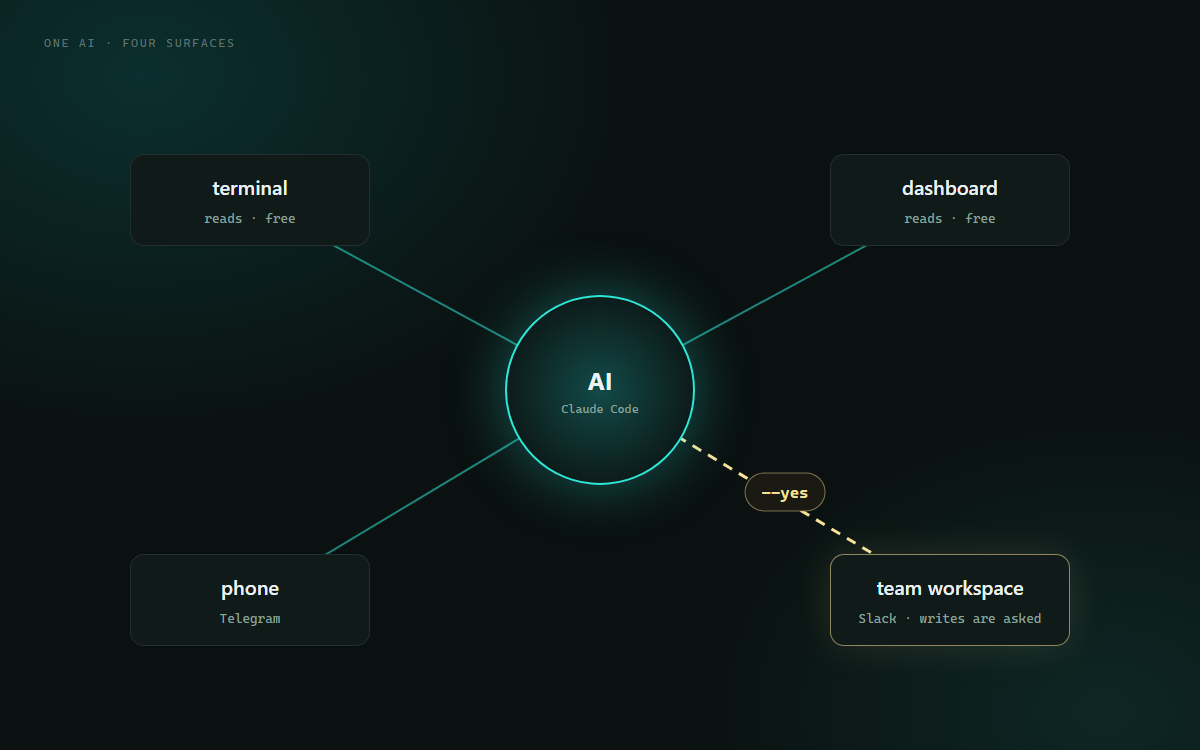
The Telegram bot has been the AI's mouth for months — it pings me at 20:30, takes orders from the couch, hands work back in the morning. But Telegram is a channel between me and it. Nothing else happens there. Slack is where a decision gets made in a thread on a Tuesday and then never gets written down anywhere else. An assistant that can't read that thread is guessing about the last two weeks of context every single time you talk to it.
So the goal wasn't "add a notification integration". It was: give it the same read access I have — channels, threads, DMs, full-text search — and then be extremely careful about the one direction that goes the other way. Reading a workspace is a private act. Posting into one is not: it lands in front of other people, under my name, and there is no undo that unsees it.
scripts/slack_client.py is a thin wrapper around the Slack Web API with eight subcommands: auth, channels, history, thread, search, users, send, edit. The first six are read-only and unguarded — the AI can use them freely, mid-sentence, without asking, because nothing they do is visible to anyone but me.
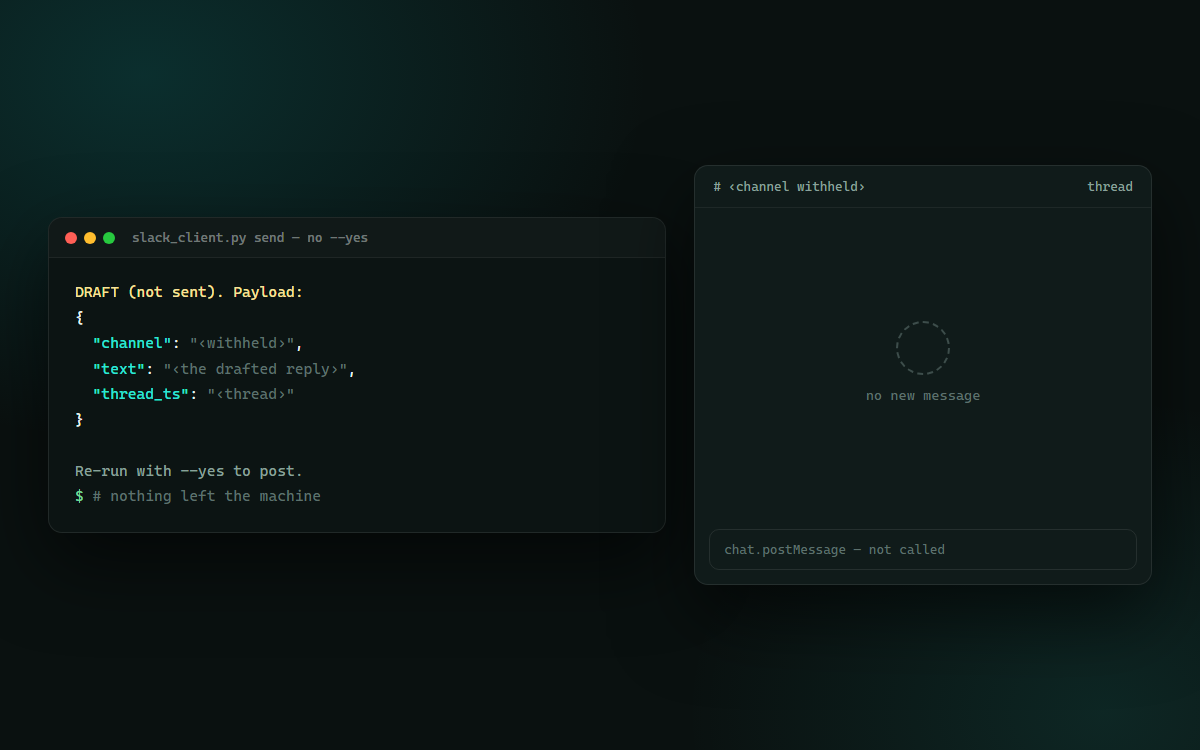
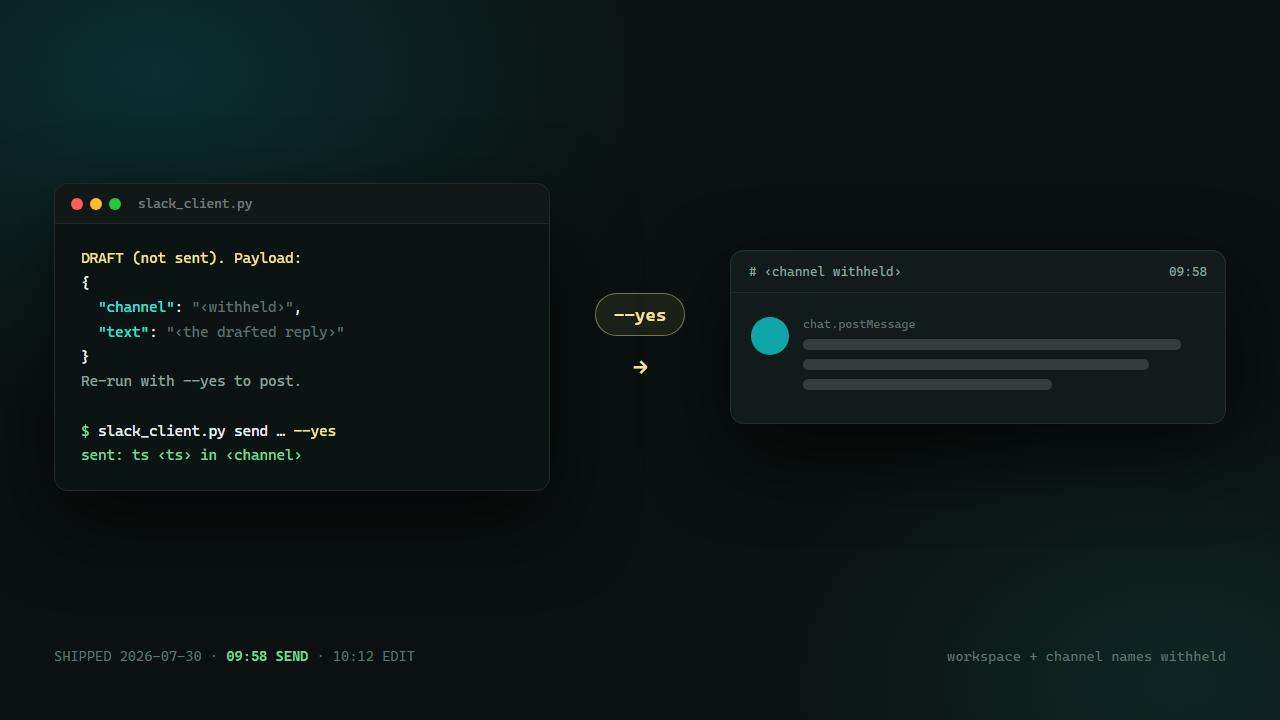
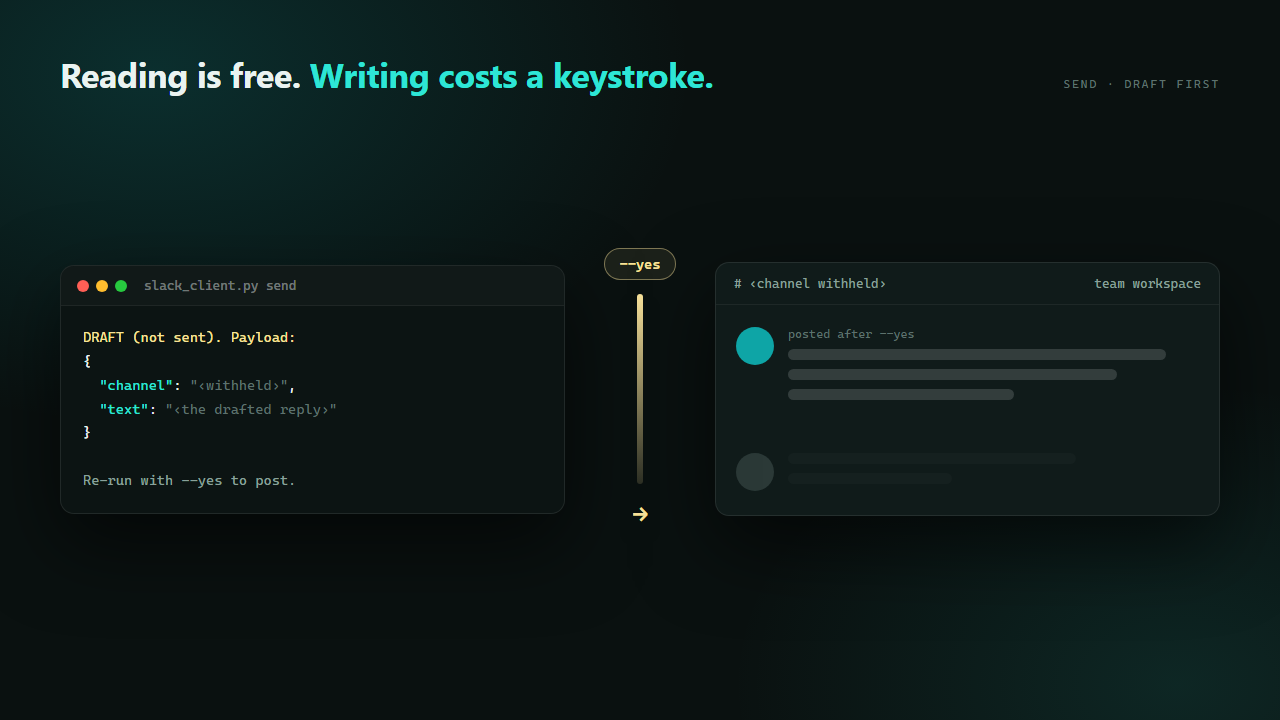
The last two are the whole design. send without --yes doesn't send. It builds the exact API payload, prints it as JSON, and exits with a line telling you how to actually mean it. There is no confidence threshold, no "obviously safe" branch, no auto-approve for short messages. The gate isn't a warning I can click through while distracted — it's a different command. The AI drafts; a human re-runs it. That's the entire contract, and it fits in four lines of Python.
def cmd_send(args):
cid = resolve_channel(args.channel)
payload = {"channel": cid, "text": args.text}
if args.thread:
payload["thread_ts"] = args.thread
if not args.yes:
print("DRAFT (not sent). Payload:")
print(json.dumps(payload, indent=2))
print("\nRe-run with --yes to post.")
return # ← nothing left the machine
d = call("chat.postMessage", **payload)
print(f"sent: ts {d['ts']} in {d['channel']}")
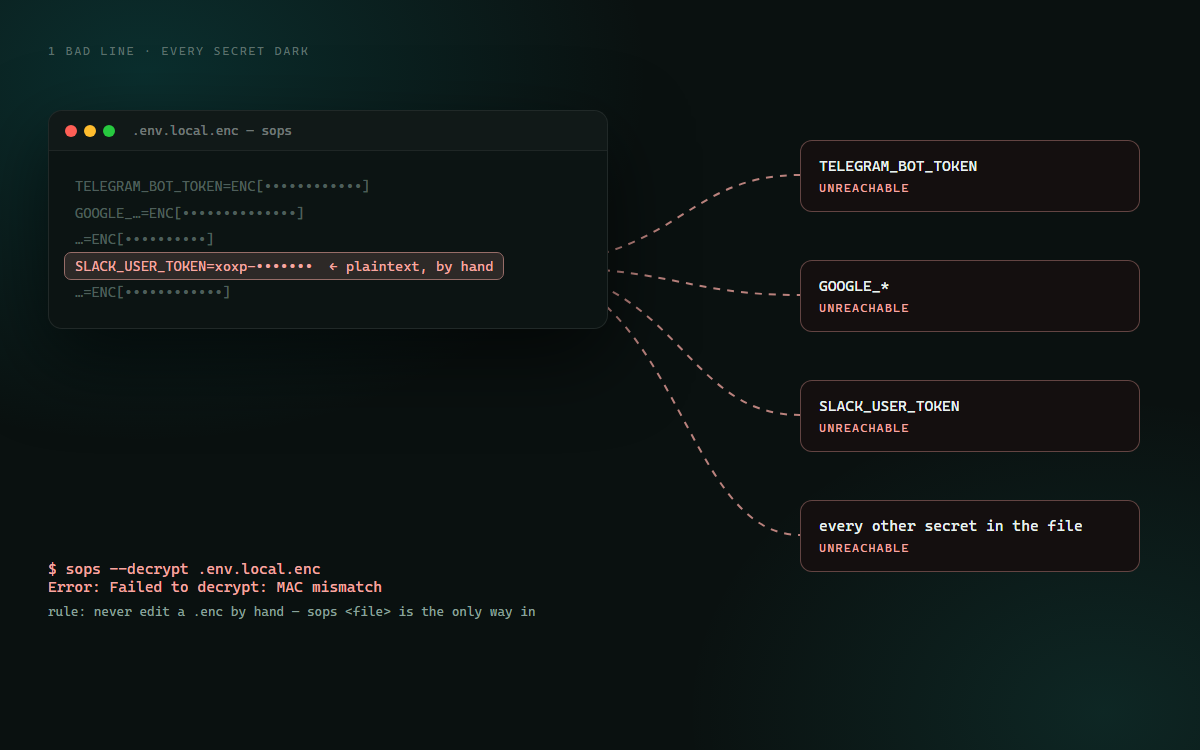
Secrets in this system live in .env.local.enc — a sops-encrypted dotenv that gets committed encrypted, on purpose, as an off-machine backup. During setup the new Slack token was pasted straight into that file as a plaintext line. Which does not fail loudly. It fails later: sops now can't decrypt the file at all, so every other secret in it goes dark too. The Telegram listener would have died on its next restart, for a reason that has nothing to do with Telegram.
The repair was unglamorous — pull the stray line back out, verify the remainder still decrypts, re-encrypt the merged file end to end in UTF-8, keep the broken versions as timestamped backups. The rule that came out of it is one sentence: never hand-edit an encrypted file. Use sops <file>, or let a script do the merge. And the interim bot token that had been exposed along the way was revoked — which itself had a lesson in it (see the gallery: bot tokens have no Regenerate button).
# what happened: a plaintext line, appended # by hand, into an encrypted dotenv $ sops --decrypt .env.local.enc Error: Failed to decrypt: MAC mismatch # blast radius = every secret in the file, # not just the new one TELEGRAM_BOT_TOKEN unreachable GOOGLE_* unreachable SLACK_USER_TOKEN unreachable # repair 1. extract the stray line 2. verify the remainder decrypts 3. re-encrypt merged, UTF-8 end to end 4. keep both broken versions as .bak # rule: never edit a .enc by hand. $ sops .env.local.enc # ← the only way in
This repo commits .env.local.enc on purpose — it means a dead laptop doesn't take the credentials with it. The cost is honest: the ciphertext is now permanently in git history, so its safety rests entirely on the age key never being committed and on rotation being real rather than theoretical. If you copy this pattern, copy the whole thing — encrypted-at-rest, key stored outside the repo, and a rotation you have actually performed at least once. Half of it is worse than neither.
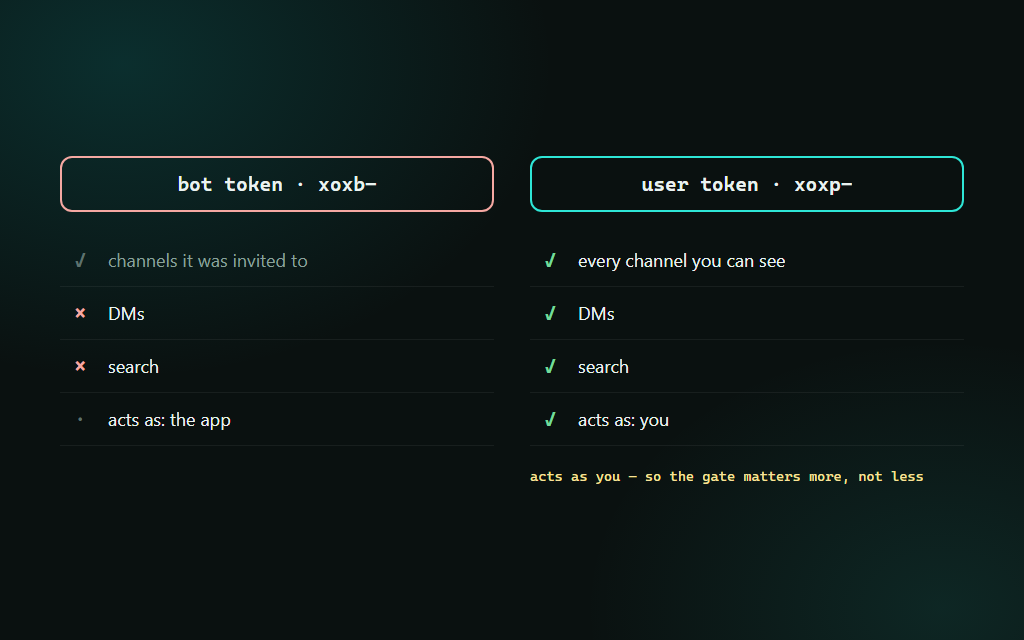
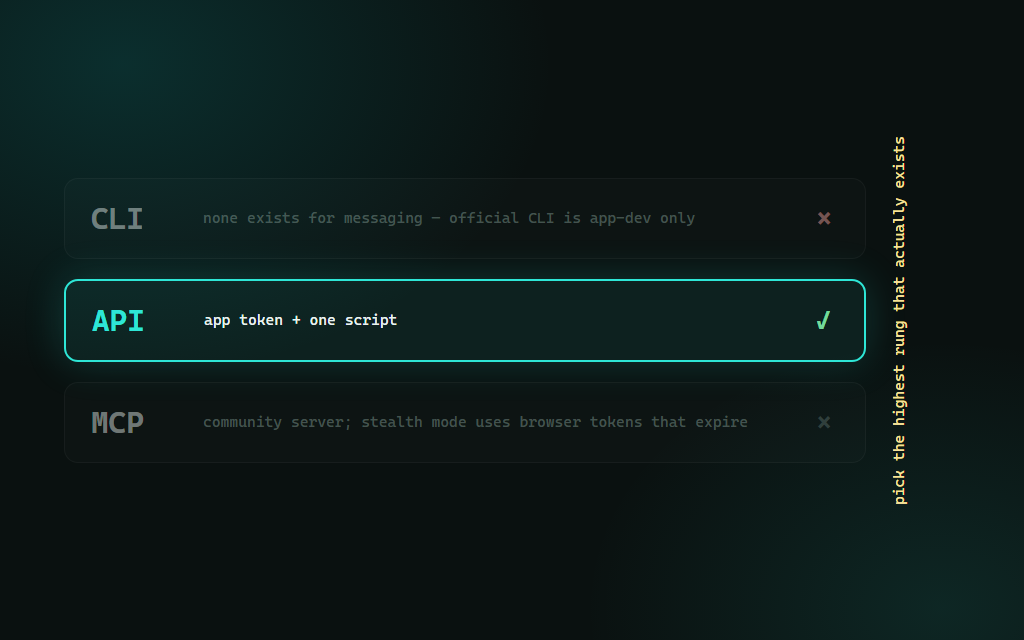
Most of the elapsed time on this build wasn't code. It was learning which token type can do what, and discovering that a missing permission is a thing you have to design around, not just fix. Tap any image to enlarge it and read the exact prompt that drew it.


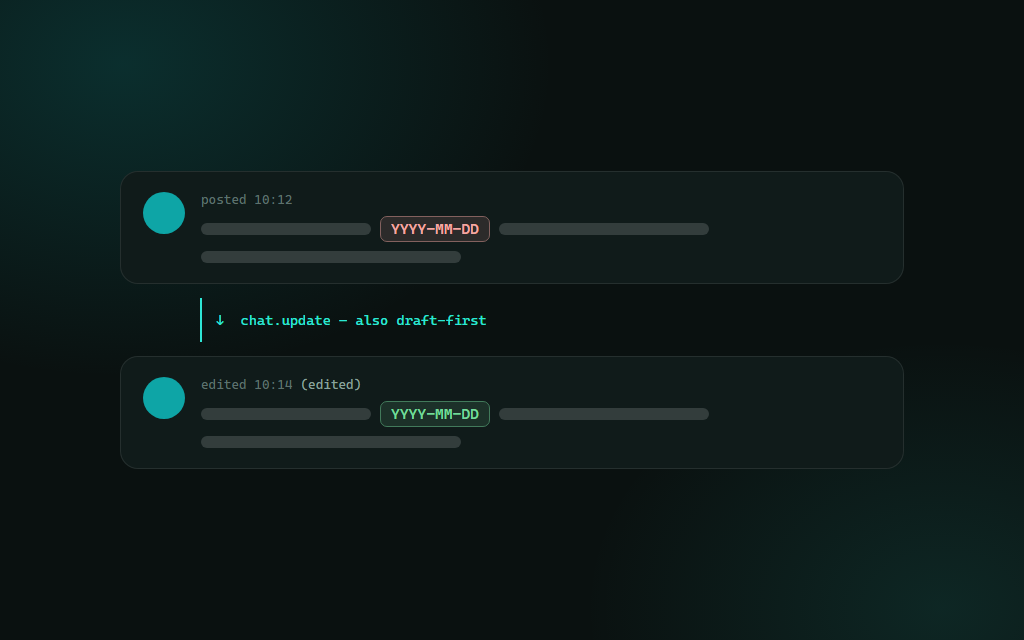
This is the whole demo: the AI reads the thread, understands what's being asked, writes a better reply than I would have — and then prints it and stops. I read it. I re-run the command with --yes. It lands. Two minutes later I spot a wrong date, and the AI edits the posted message in place rather than apologising underneath it — because edit shipped fourteen minutes after send did, and it's draft-first too. The point isn't that the AI is untrusted. It's that a shared workspace is other people's attention, and I'm not willing to spend that automatically. Every new channel this thing gets — terminal, phone, dashboard, now a team workspace — arrives with more reach and exactly the same rule.
A live draft-confirm-send, an in-place edit fourteen minutes later, and the encrypted-file mistake that nearly took four other services down with it.
The script is welded to my workspace and my token, so the copyable thing is the shape. These four rules are what make a write-capable integration something you can sleep next to. Everything in this episode is free and open — clone it, run it, make it yours.
# 1. MAKE THE GATE A SEPARATE COMMAND.
# if not args.yes: print(payload); return
# Not a prompt you can hit enter through, not a
# confidence threshold, not an allow-list. A human
# re-runs it, or it does not happen. Four lines.
# 2. SPLIT VERBS BY WHO CAN SEE THE RESULT.
# Read commands touch nothing anyone else notices —
# leave them unguarded so the AI actually uses them.
# Gate only what lands in front of other people.
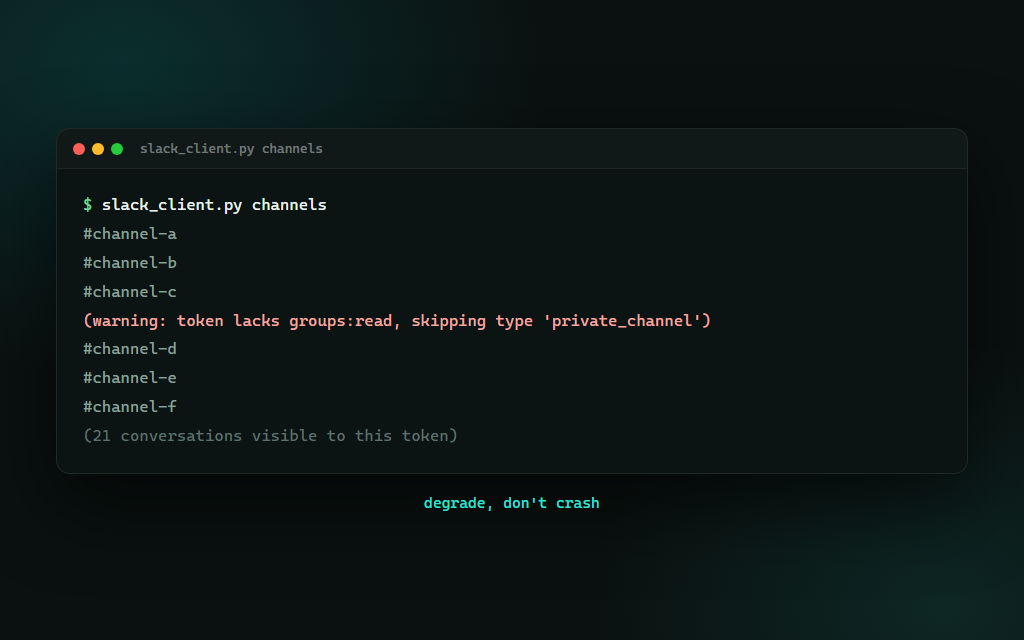
# 3. DEGRADE ON A MISSING PERMISSION, DON'T DIE.
# Catch the missing-scope error, drop the one type
# you can't read, warn on stderr, keep going. A
# half-visible workspace still beats a stack trace.
# 4. NEVER HAND-EDIT AN ENCRYPTED FILE.
# One plaintext line appended into a sops .enc makes
# EVERY secret in it unreadable — and you find out at
# the next restart of something unrelated. Use the
# tool, or merge via script. Then rotate for real.
Rule 1 is four lines of Python and it's the whole episode. Comment SLACKSEAT on the post and the bot DMs you the pattern.
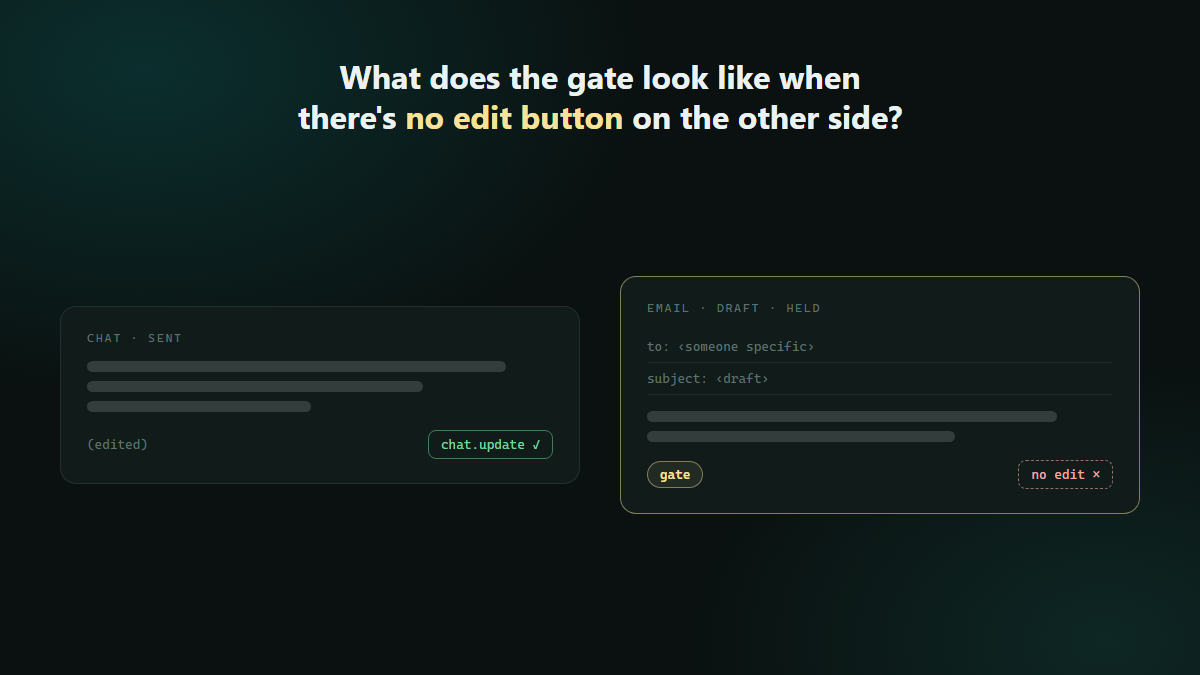
The household-costs scan reads Gmail every three days. The job-hunt tooling reads it too. But the send side has never been wired — and email is the one channel where a mistake is permanent, addressed to someone specific, and impossible to chat.update away. Slack got a gate that costs four characters. What does the gate look like when there's no edit button on the other side?