Telling Technology · Learning in public
All episodes
EP.145 - OFF BY DEFAULT
A Claude Code workflow · the dependency list before the plug

I switched off my always-on server. Then the wake-up failed

One of my two home machines ran day and night because everything might need it. On 8 November I turned it off for the electricity bill, with one command to wake it again. Power-off took 36 seconds. The wake-up did not work at all. What kept that from becoming a bad evening was not the script. It was a list I had written three weeks earlier.

A dark server tower with its power button glowing amber and a small sleeping moon above it
● off in 36 s · 60+ wake signals · 0 answers on the first try
what actually needs that machine to be on?
01 The old default

It stayed on because everything might need it

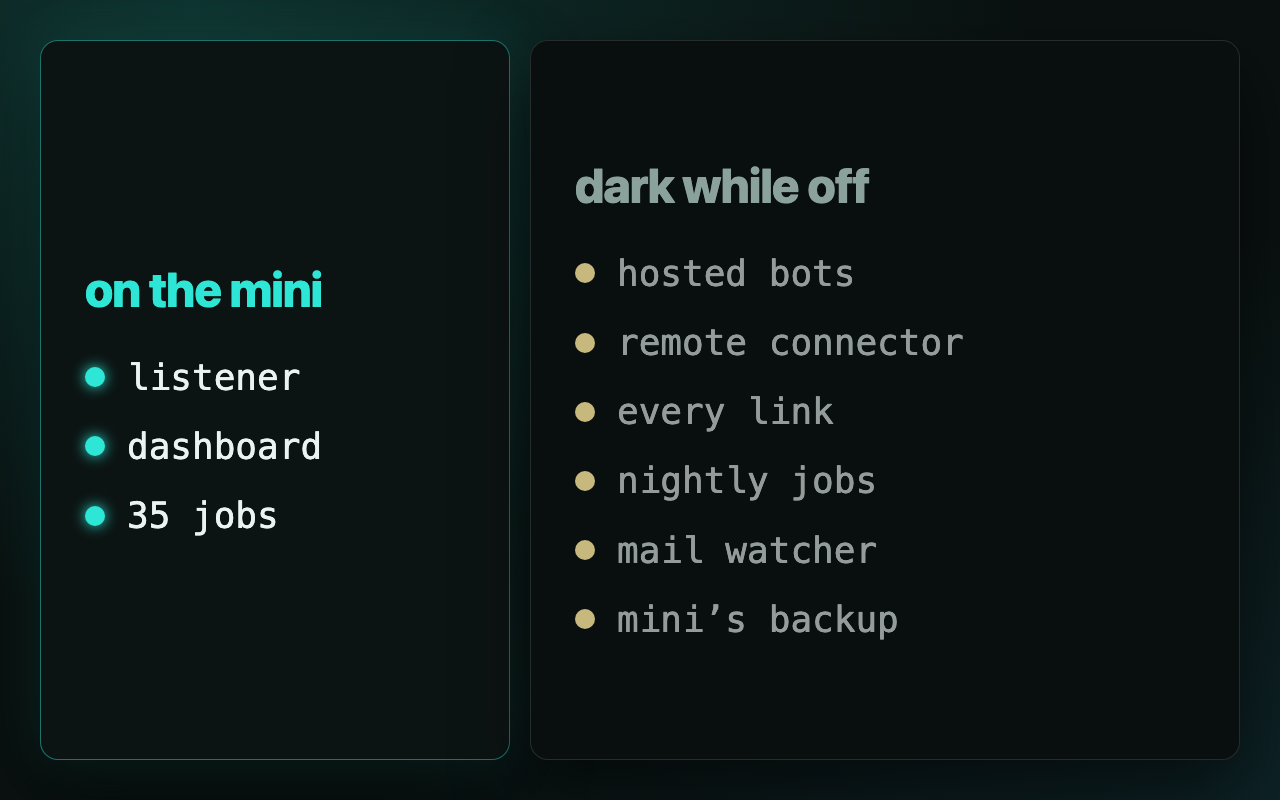
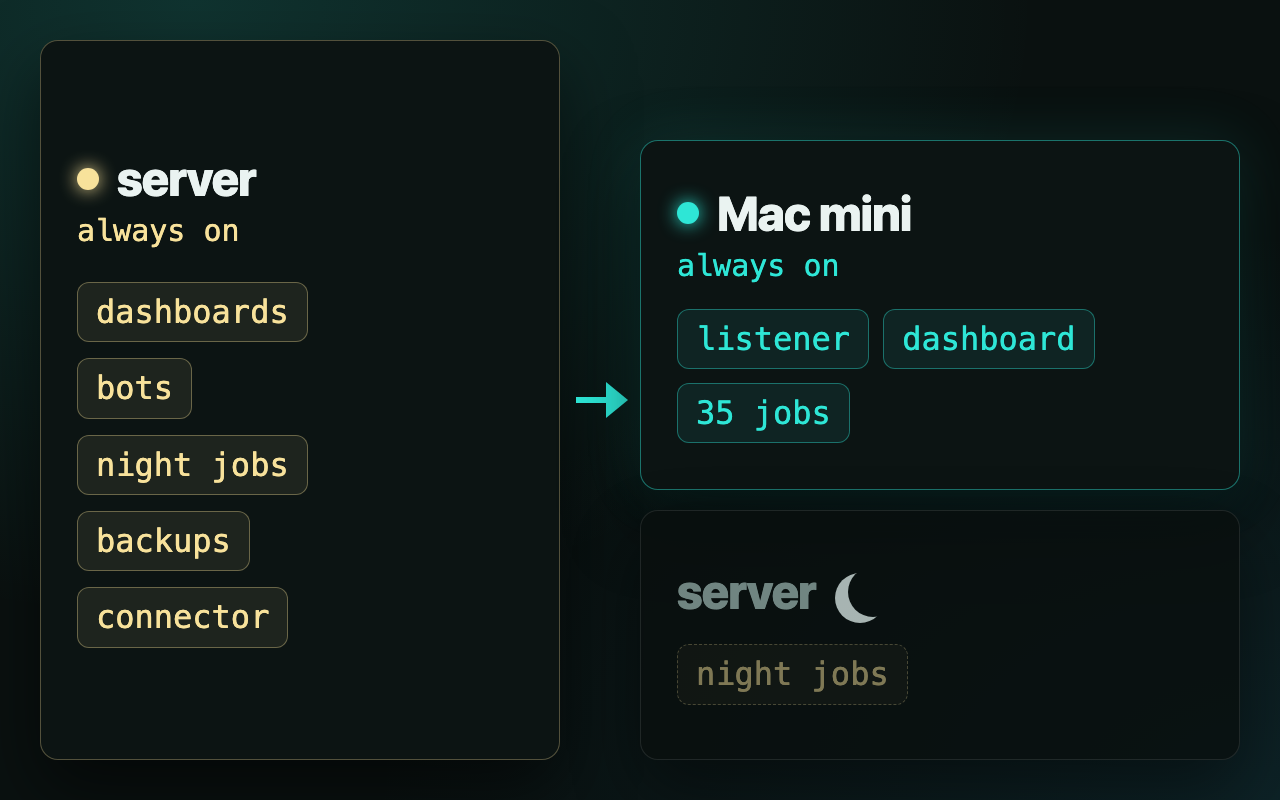
My big Windows PC at home never slept. Scheduled jobs, small bots, dashboards, the server behind my AI tools: anything might want it at any hour, so the safe answer was to leave it on. This autumn a Mac mini took over the parts that matter most by day: the message listener, the main dashboard, 35 scheduled jobs. What was left on the PC ran mostly at night or on demand, and I was paying for electricity around the clock anyway. On 8 November at 17:55 I said so in a Claude Code session: too expensive, turn it off now. The move to the mini was not finished. I did it anyway, which is why this episode is about knowing exactly what you are switching off.

reconstructed from notes, not a transcript
> electricity is too expensive to leave this box on around the clock. Power it off now and wake it from the mini when something still needs it. What goes dark?
The move is not complete: three phases are still open. Before any power-off I’ll copy what lives only on this box, then write down what stops while it’s off.
A before and after diagram: on the left one big server carrying every job, on the right a small always-on Mac mini carrying most of them and the big server drawn dim with only the night jobs left on it
before → after
what runs where (names made generic, mockup)
02 The list

Three weeks earlier I had counted what needed it

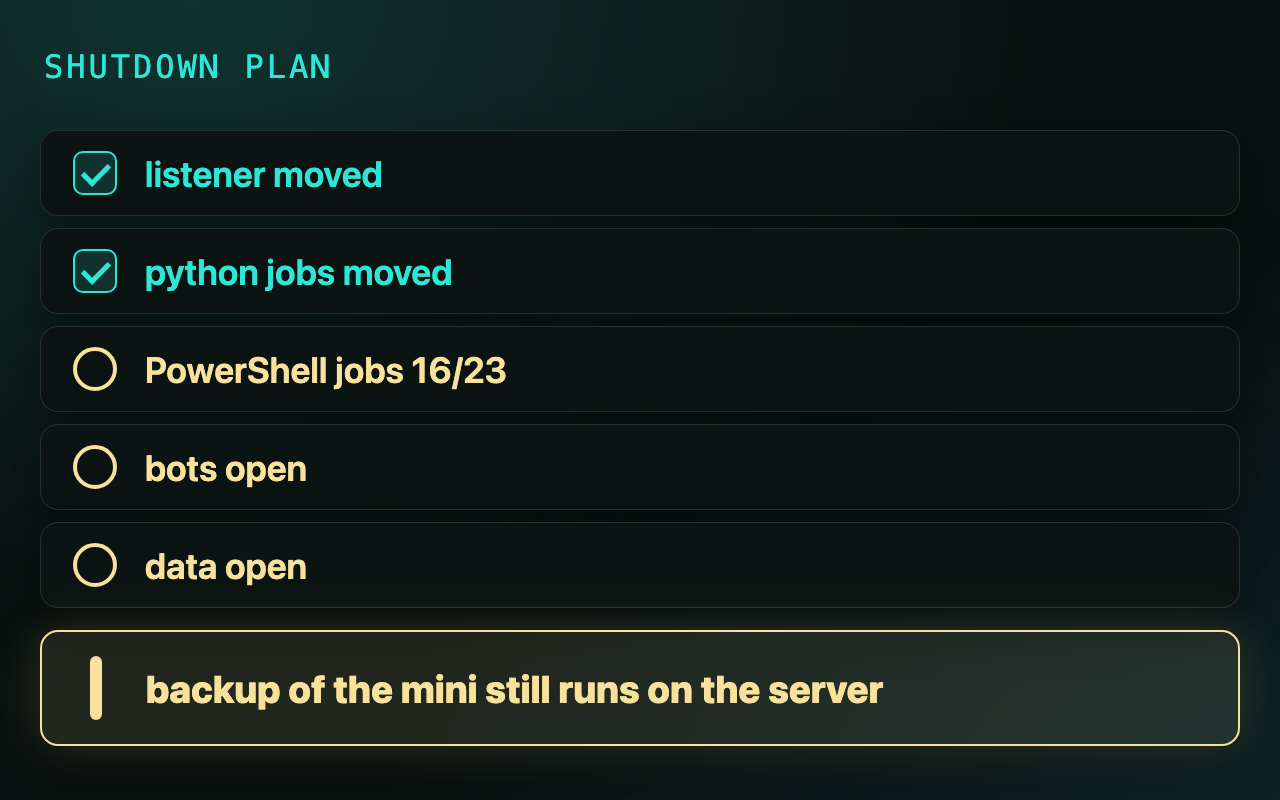
On 17 October Claude Code took a read-only inventory of that machine, before anything moved. The numbers were humbling: 75 scheduled jobs, 68 of them only on that box, eight always-running services, 155 files that mention it by name, and ten places holding data that existed nowhere else. That list became the shutdown plan: phases, one thing at a time, a rollback for each step. On the evening of the power-off it paid for itself. Because the ten places were written down, the stores that could be copied safely went to the mini in the three minutes before the plug (the bots kept their own state until each one moved), and one dashboard commit that only that box had got pushed. The updated list also held the line I liked least: the nightly backup of the mini, the machine I was moving everything to, ran only on the box I had just turned off. The mini got its own backup job the same evening. Without the list, I would have found that one by needing it.

reconstructed from notes, not a transcript
> before the power-off: what exists only on this box? Copy it to the mini. Leave out anything that looks like a secret.
Copied in three minutes, 18:03 to 18:06: session archive 1.5 GB, transcripts 1.7 GB, screenshots, bot backups, the uncommitted files of seven repos. Env files left out. One commit existed only here, now pushed.
A shutdown plan as a checklist: moved jobs ticked in teal, open phases in amber, with a highlighted line saying the backup of the new machine still runs on the old one
what was still open
the plan as a checklist (generic names, mockup)
03 The flip

Off took 36 seconds. On did not happen

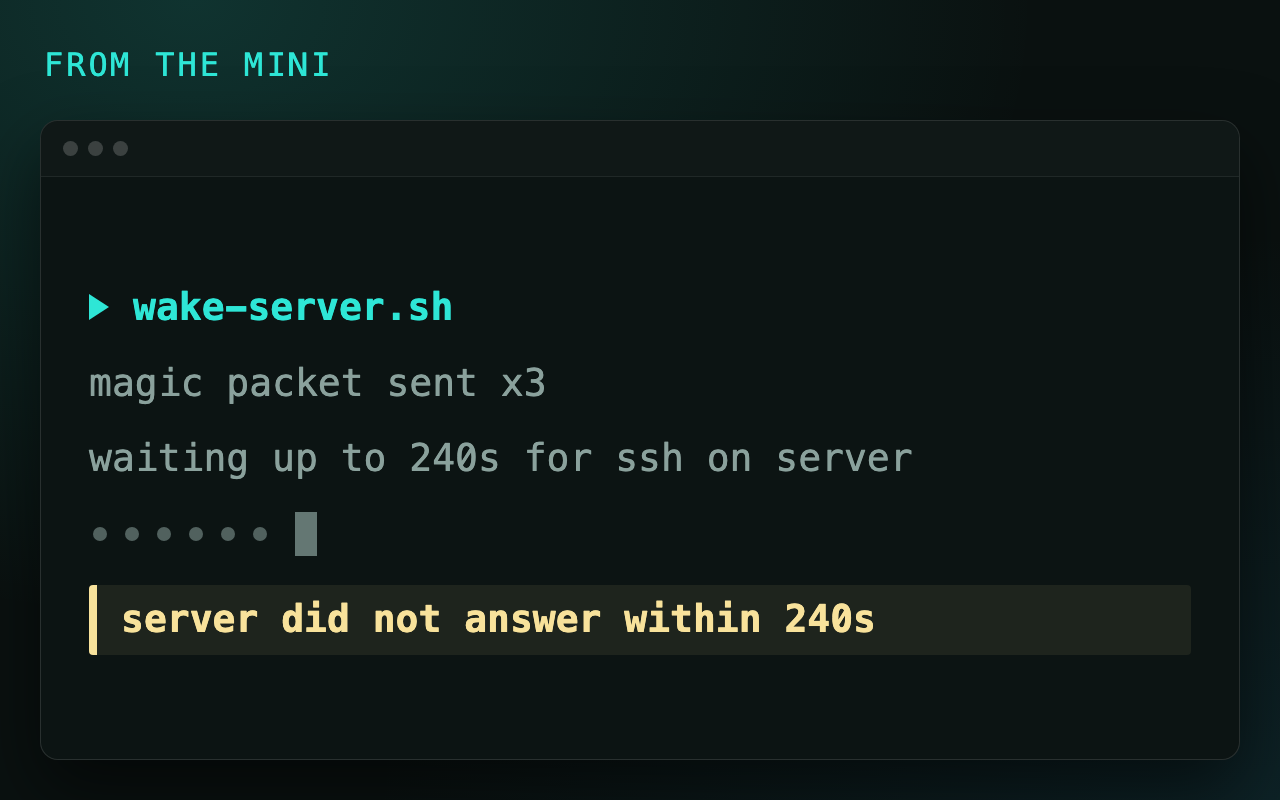
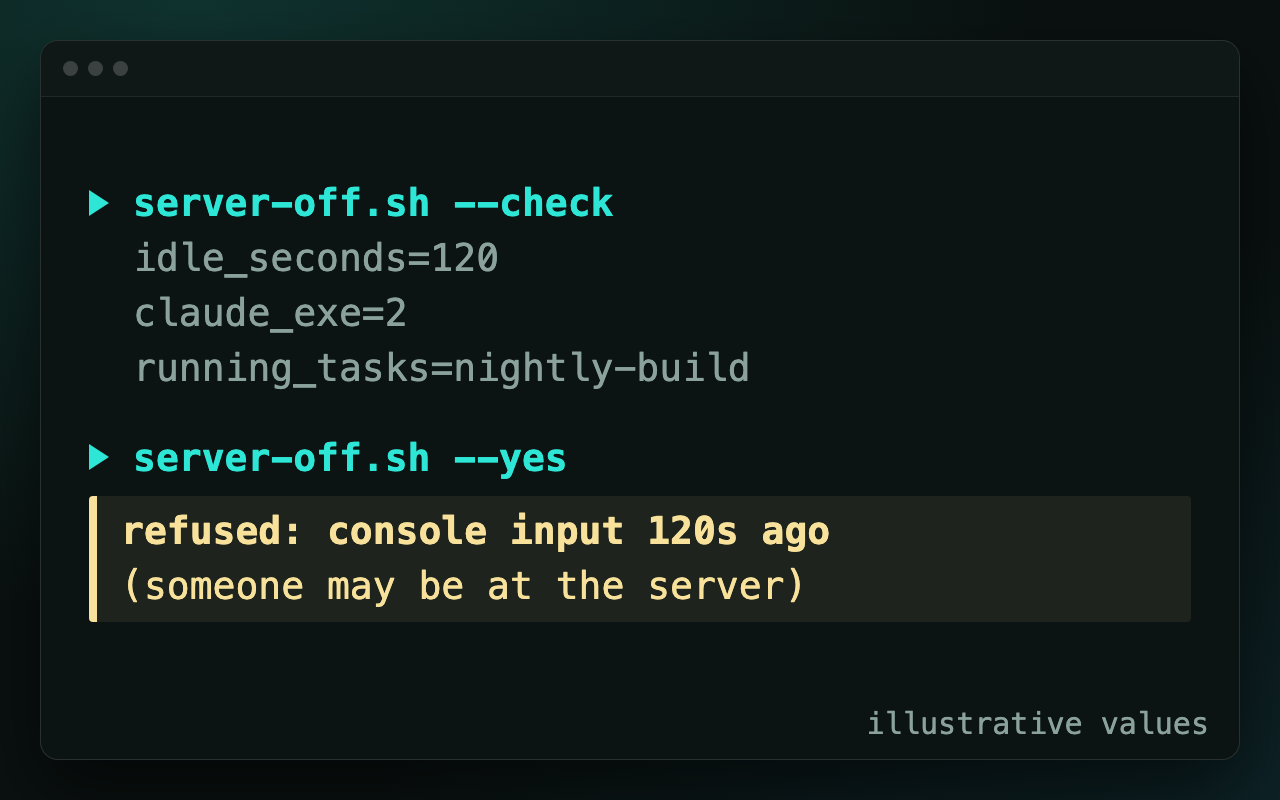
The two commands are small. The off command first shows what it would interrupt: how long since anyone touched the keyboard, how many Claude sessions are running, which tasks are mid-run. Then it gives 30 seconds of warning, and it refuses outright if someone used the machine in the last ten minutes. The wake command sends a magic packet, the special network message that tells a powered-down network card to start its machine, and then waits up to four minutes for the machine to answer. Windows was ready: wake settings on, and fast startup switched off, because that half-shutdown leaves many boards unable to wake. At 18:08 I ran the first full cycle. Power-off: 36 seconds. Wake-up: more than 60 packets over 15 minutes, no answer, nothing on the network. When this was written, the likely reason sat below Windows. The motherboard has to allow it too, in two BIOS settings you can only change standing at the machine. On my ASUS board they are called Power On By PCI-E and ErP Ready.

reconstructed from notes, not a transcript
> run the whole cycle: off, wait, wake.
Off worked in 36 s. Wake did not: 60+ magic packets over 15 minutes, no SSH, no ARP. Likely the board: BIOS > APM > Power On By PCI-E enabled, ErP Ready disabled. That one has to be you, at the machine.
A terminal running the wake command: magic packet sent, waiting up to 240 seconds, then an amber line saying the server did not answer
first test · 8 Nov 18:08
the real outcome, name and address made generic (mockup)
⚠️

This was not finished, and it was not free

When this was written, “off by default” was the decision, not yet the daily reality. While the machine was off, the dark list was long and real: the small bots I host, including one a friend uses; the remote connector for my AI tools; every link pointing at that machine; a mail watcher; my nightly jobs; the mini’s backup. The Claude session doing the work lost some of its own tools a minute after the power-off. The machine came back on that evening, and as this was written the off-then-wake test had not been run again. My own plan also said fourteen clean days before any power-off, and the electricity bill overruled it. And I still owned an always-on machine. It was the Mac mini by then. What changed is which machine, and how much of the work has to live on it.

04 The guard rails

What has to stay boring when a machine restarts

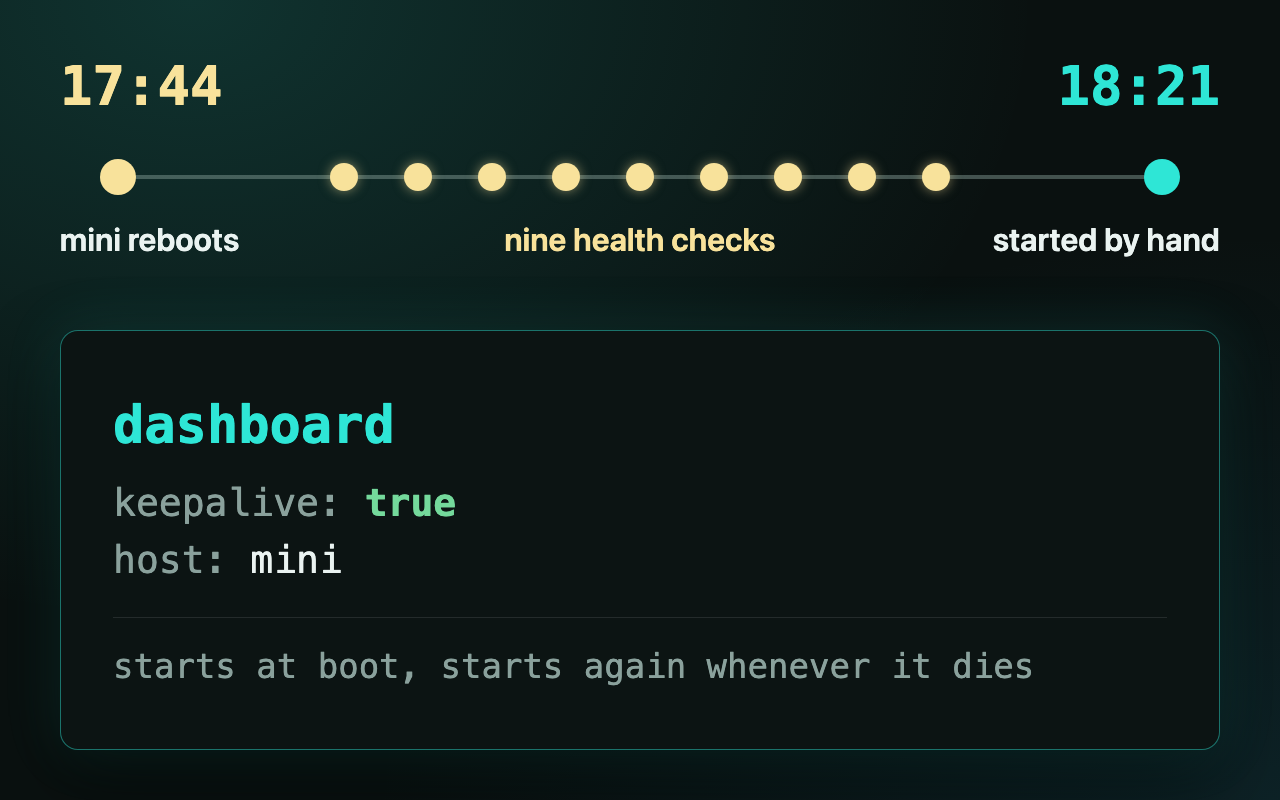
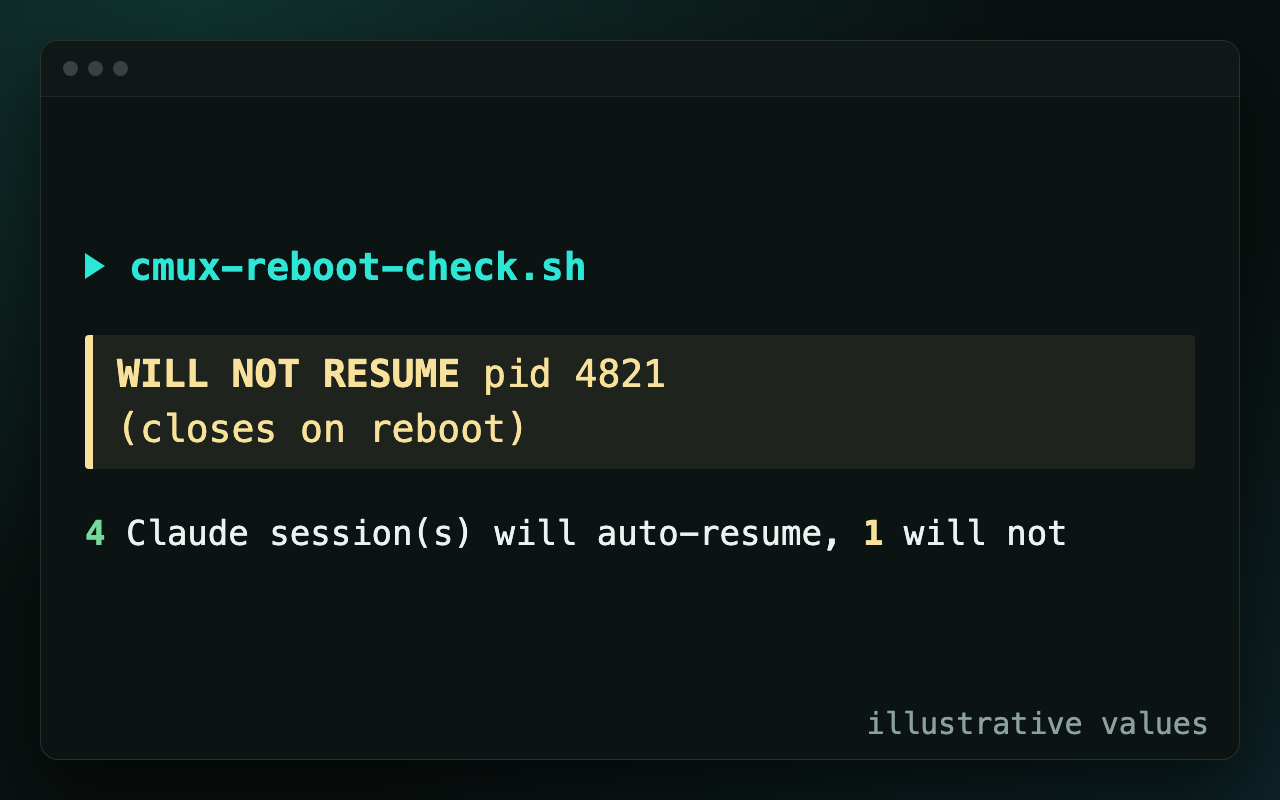
If the mini is the machine that stays on, a restart of the mini has to be a non-event. Two days before the power-off it was not: the mini rebooted at 17:44, nothing brought the dashboard back, and nine health checks stayed red until I started it by hand at 18:21. After that, the dashboard became a keepalive job that starts at boot and again whenever it dies. A second script lists every Claude session that will not come back after a restart. A third brings my terminal helper back, and is safe to run any number of times. These are mockups with generic names. Tap any image to enlarge it.

BUILT ON THE MACHINE IT DESCRIBES

Always-on was a habit. The list made it optional

An always-on server is the answer you give when nobody has written down what needs it. Once it was written down, most of it could move, and most of the rest turned out to be night work or on demand. This page was on that list: when this was written, the nightly job that built it still ran on that box, and it was on the dark list on 8 November. It got built because the machine was on that night. The next step in the plan, not chosen yet then, was off by day with a short window at night. Write the dependency list first. Then the power button stops being scary, even when the wake-up fails.

The same dark server with its power light out and a moon above it, and a single sheet of paper with a list on it lit teal on the desk beside it
inventory 2026-10-17 · 68 of 75 jobs on one box · off 2026-11-08 in 36 s · first wake test failed · enabled jobs 2026-11-09: 42 mini / 24 box / 2 both
06 Steal this

Steal the off-by-default checklist

This works for any machine you keep on just in case. Have your AI make a read-only list of what depends on it, write the two small commands, then test the wake-up before you rely on it. The order matters: I did the last step too late. The code is not published yet.

skill the inventory prompt: read-only, what needs this machine, what lives only here cmd wake + off scripts: magic packet, wait for SSH, check before shutdown, refuse if someone is there template the shutdown plan: phases, one thing at a time, a rollback per step assets the checklist: fast startup off · wake on magic packet on · Power On By PCI-E on · ErP Ready off
run it # repo soon. The shape: list what needs the box → copy what lives only there → off script that checks first → magic packet + wait for SSH → BIOS settings on the board → test the full cycle before you trust it
Still open when this was written

The second wake-up test

The next step was to go to the machine, change the two settings in the BIOS, and run the same command again. If it answered, the box would get a short window at night and stay dark by day. If it did not, I would find out what else I assumed.

A hand on a dark server tower, with a BIOS settings screen glowing teal on a small monitor beside it
status as of the build, not today