I gave a free local model a 179-rule rulebook and one web page. It proposes one tiny patch, a measuring tool decides keep or revert, git remembers every keep, and the whole thing has no publish button.
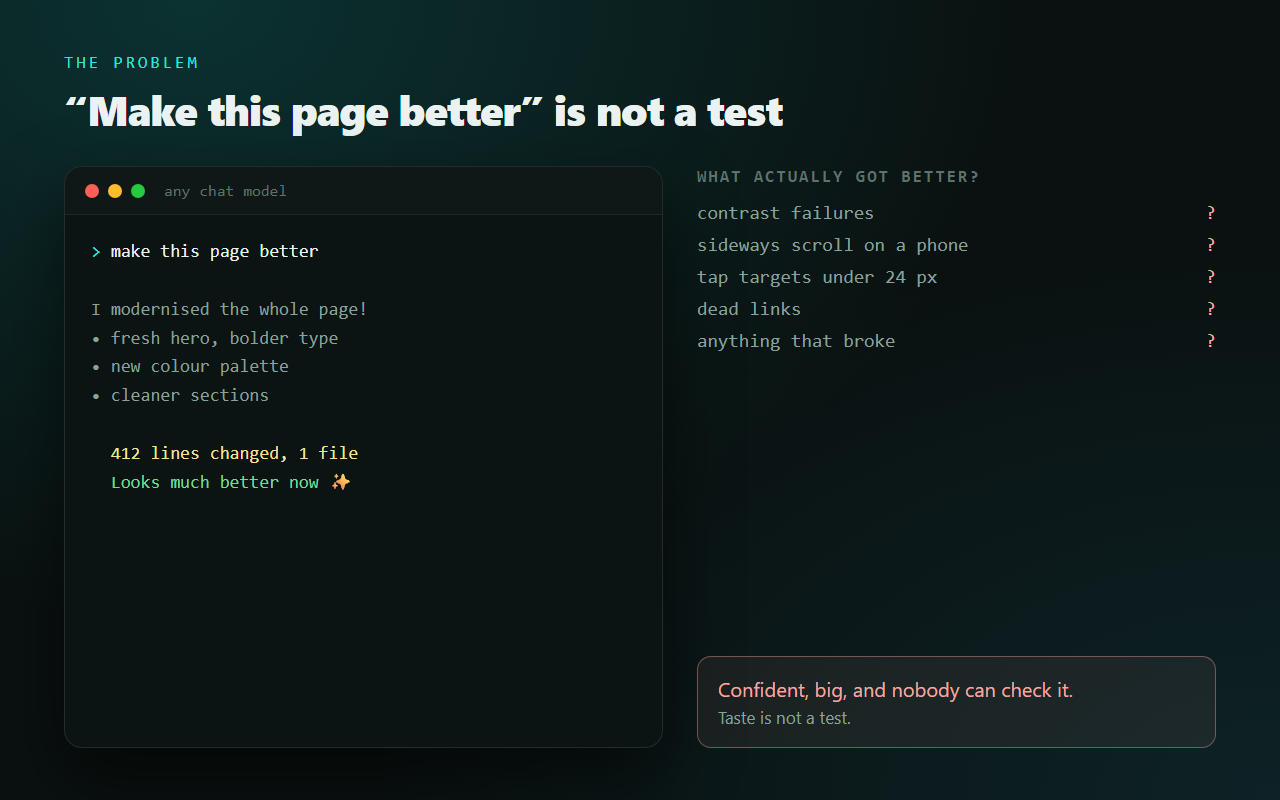
Ask any AI to “make this page better” and you get a confident rewrite: new hero, new palette, four hundred changed lines. Did contrast improve? Does it still fit a phone? Nobody can say, because nothing was measured. I had already run this loop twice with a frontier model, 29 versions of my resume page and the Rolodex polish loop. Both worked, but both ran on a frontier model and both depended on that model having good taste that night.
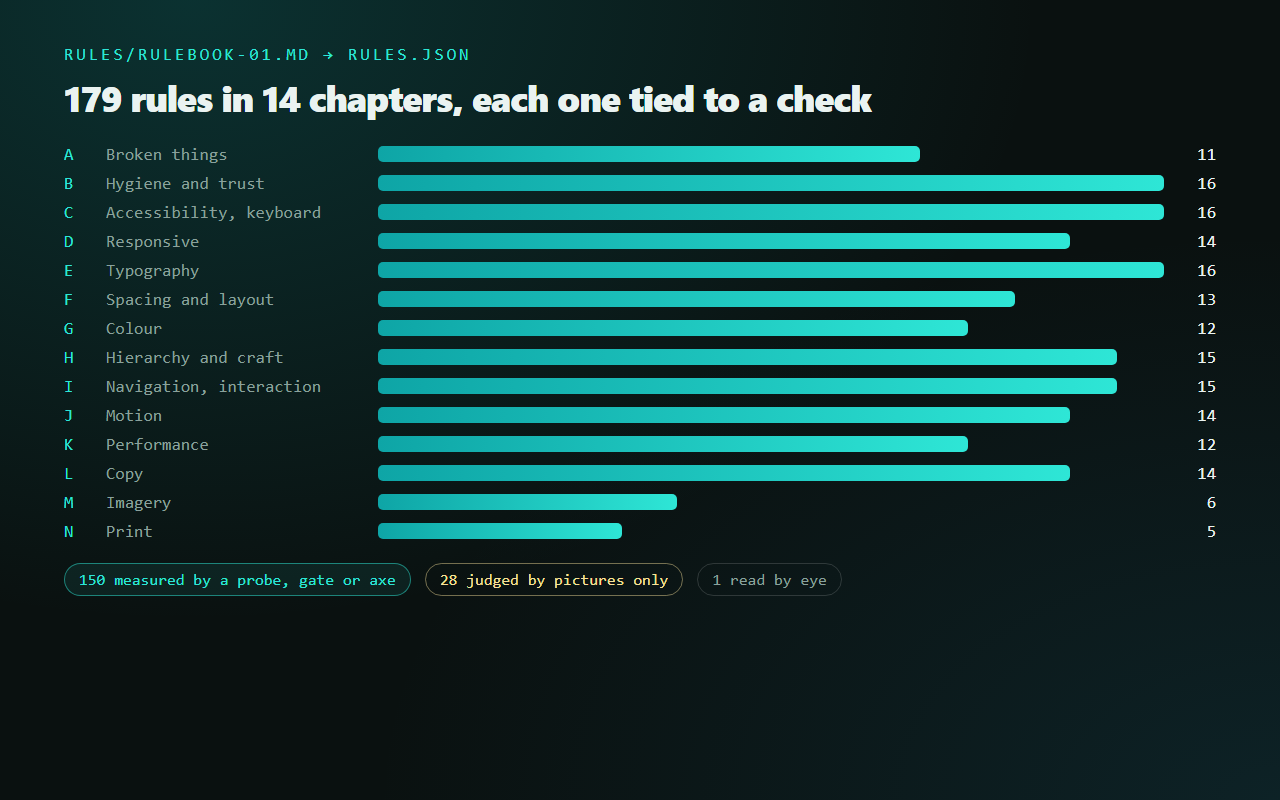
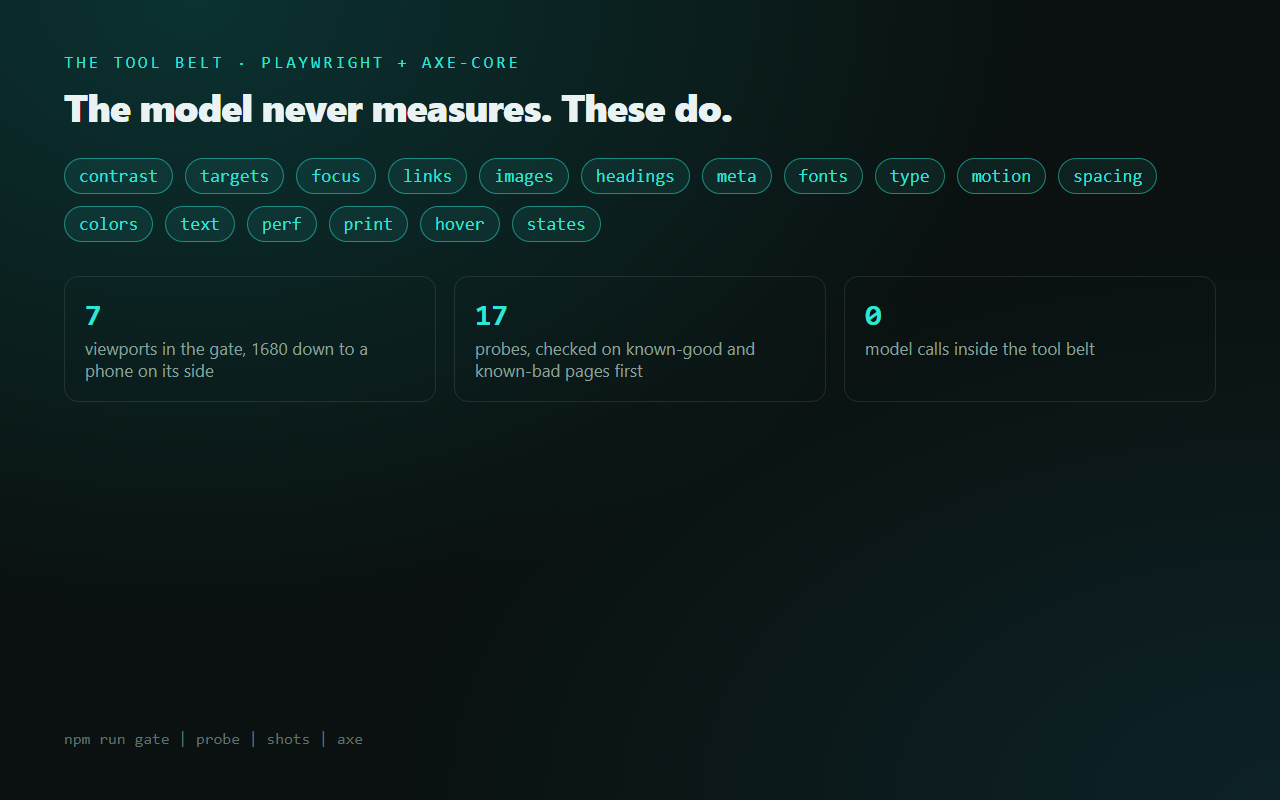
Every fix from those earlier loops became a rule in rules/rulebook-01.md: 14 chapters from Broken things to Print. A compiler turns it into rules.json, where 150 rules point at a probe, the gate or axe-core. The tool belt is Playwright plus axe-core: a seven-viewport gate and 17 probes (contrast, targets, focus, links, images, headings, meta, fonts, type, motion, spacing, colors, text, perf, print, hover, states), each validated on known-good and known-bad pages before a model ever sees them. The 28 rules that only pictures can judge are logged but never kept automatically.
eq(verdict,'PASS') and empty(overflow). (paraphrased; the check is verbatim from rules.json)
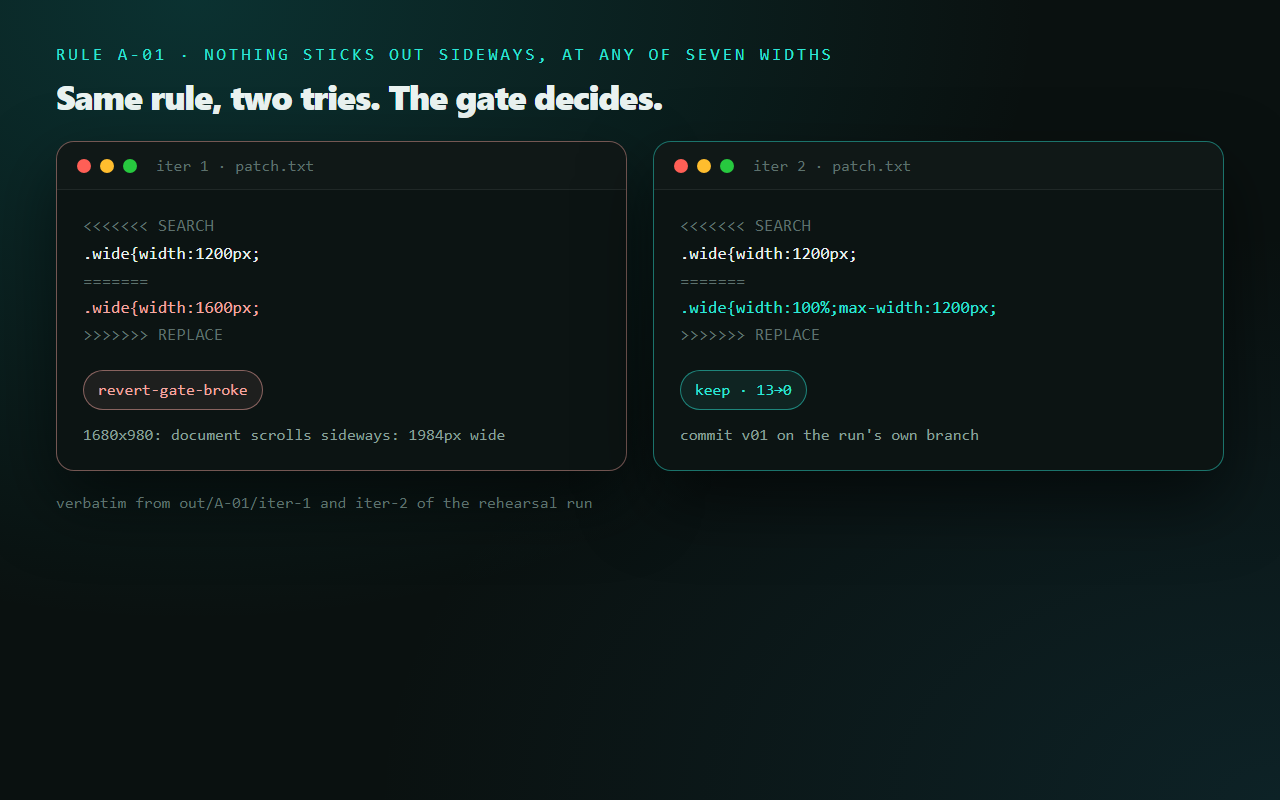
The local model (qwen3.8:27b on the Mac mini, called through my model router) gets one rule card and a page excerpt and answers with one SEARCH/REPLACE block. The runner applies it, measures again, and the judge compares numbers: better and nothing broke = keep, a git commit on the run’s own improve/<id> branch. Worse, broken gate or unsure = revert, byte identical. Two tries per rule, never a third. A control page on the tailnet takes a URL from my phone, a fetcher copies the page into a local git working copy, one worker runs one job at a time, and a STOP button ends it after the current iteration.
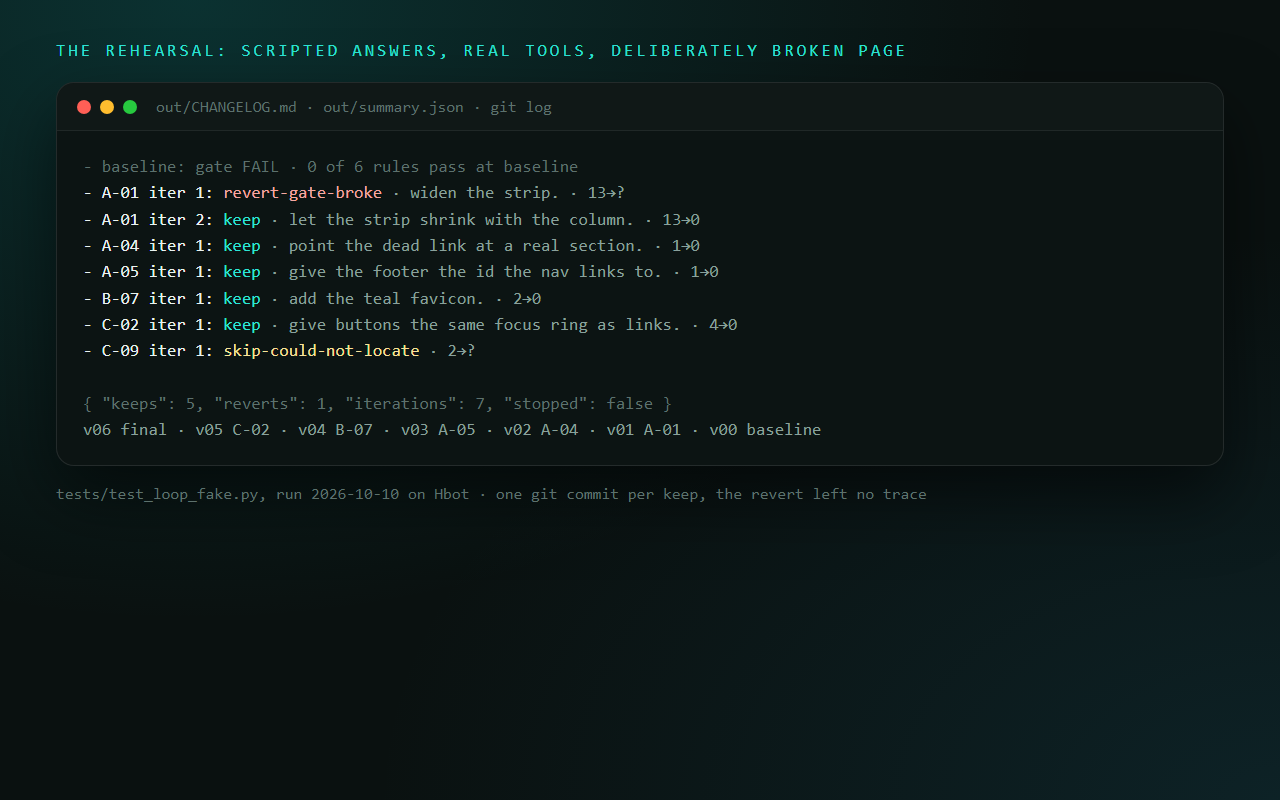
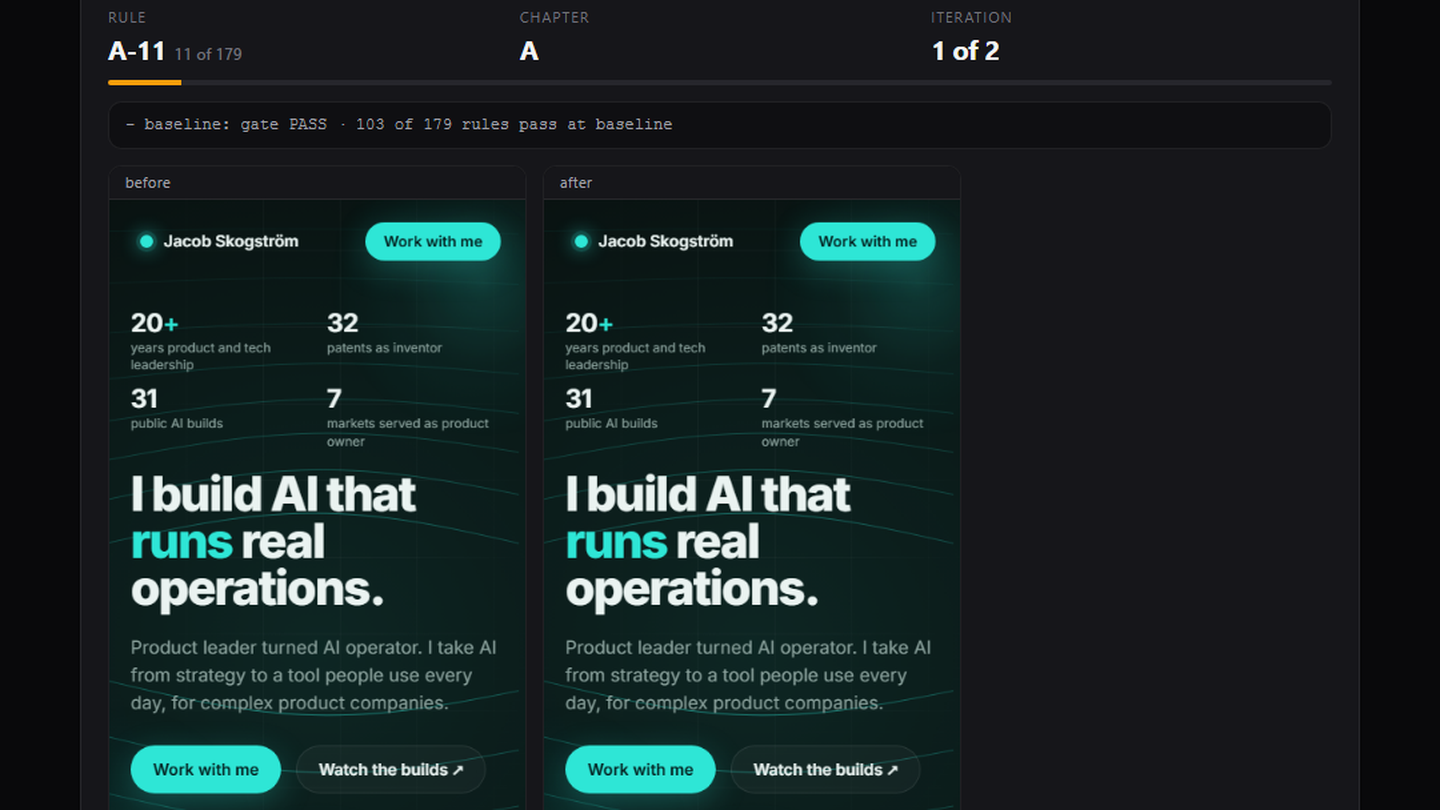
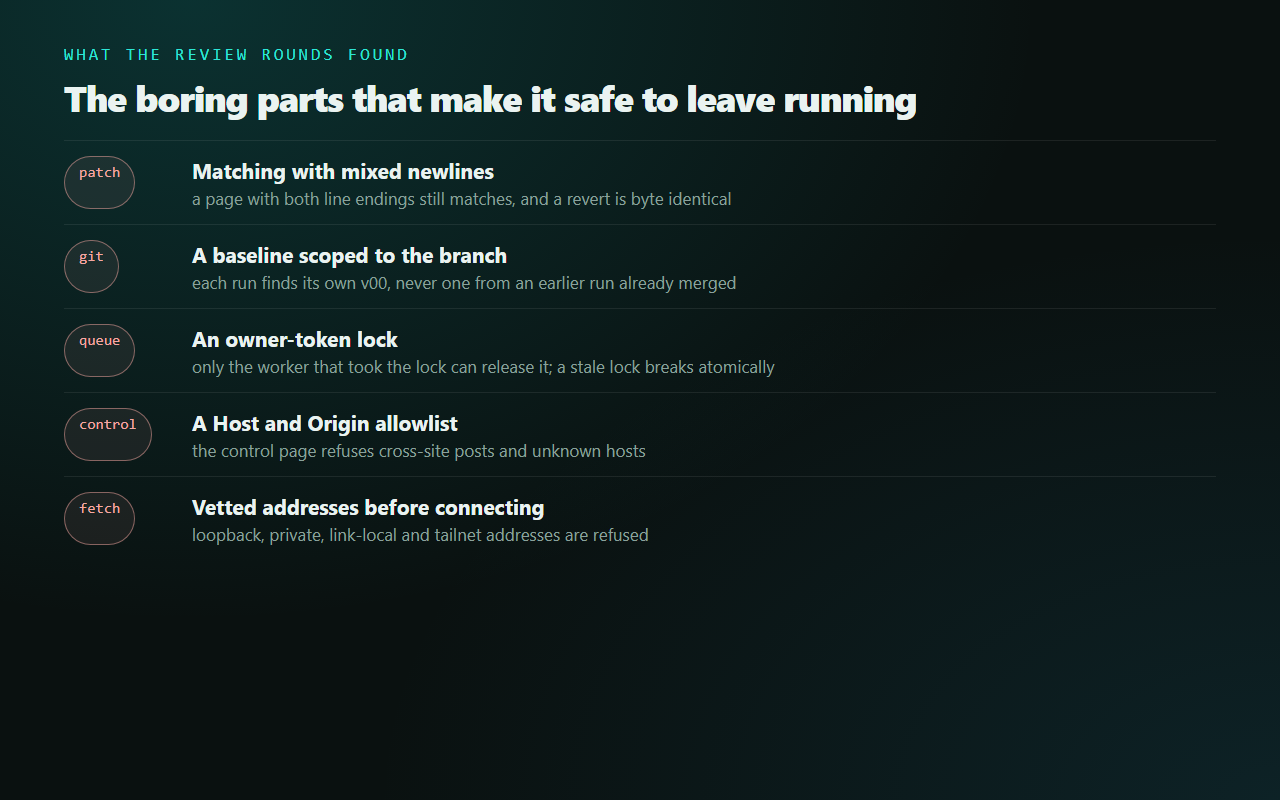
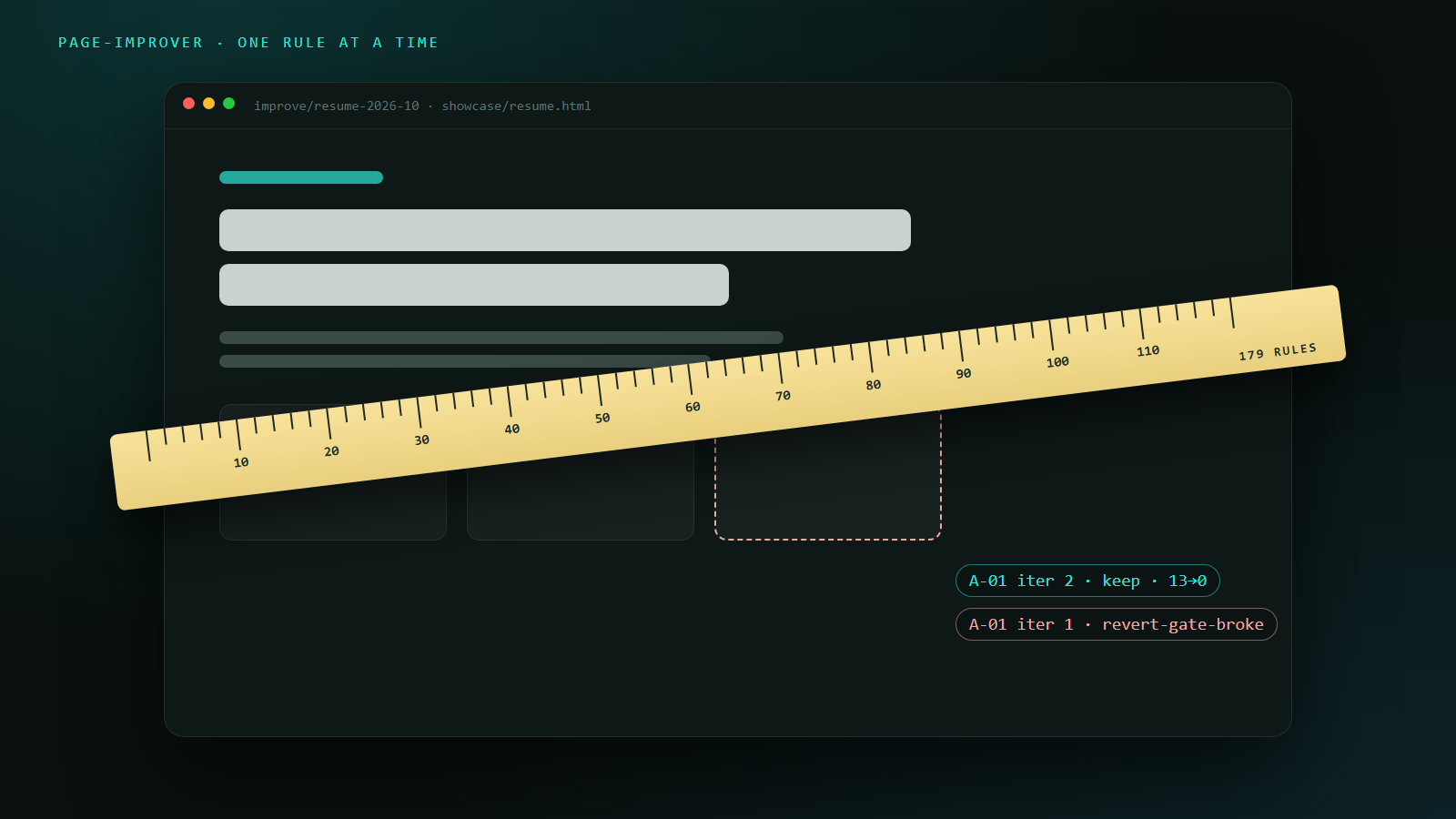
The run above is the rehearsal: real tools, a real git branch, a deliberately broken fixture page, but scripted model answers (fake-model). The dry run on my real resume page measured the baseline (gate PASS · 103 of 179 rules pass) and turned up five things to fix in the tool itself. The first live run with qwen3.8:27b on the Mac mini is still pending, so I am not quoting a model score here.
The first picture is a real screenshot of the control page during the dry run. The other three are typographic cards built from the repo and the rehearsal output. Tap any image to enlarge it and read the exact prompt that drew it.


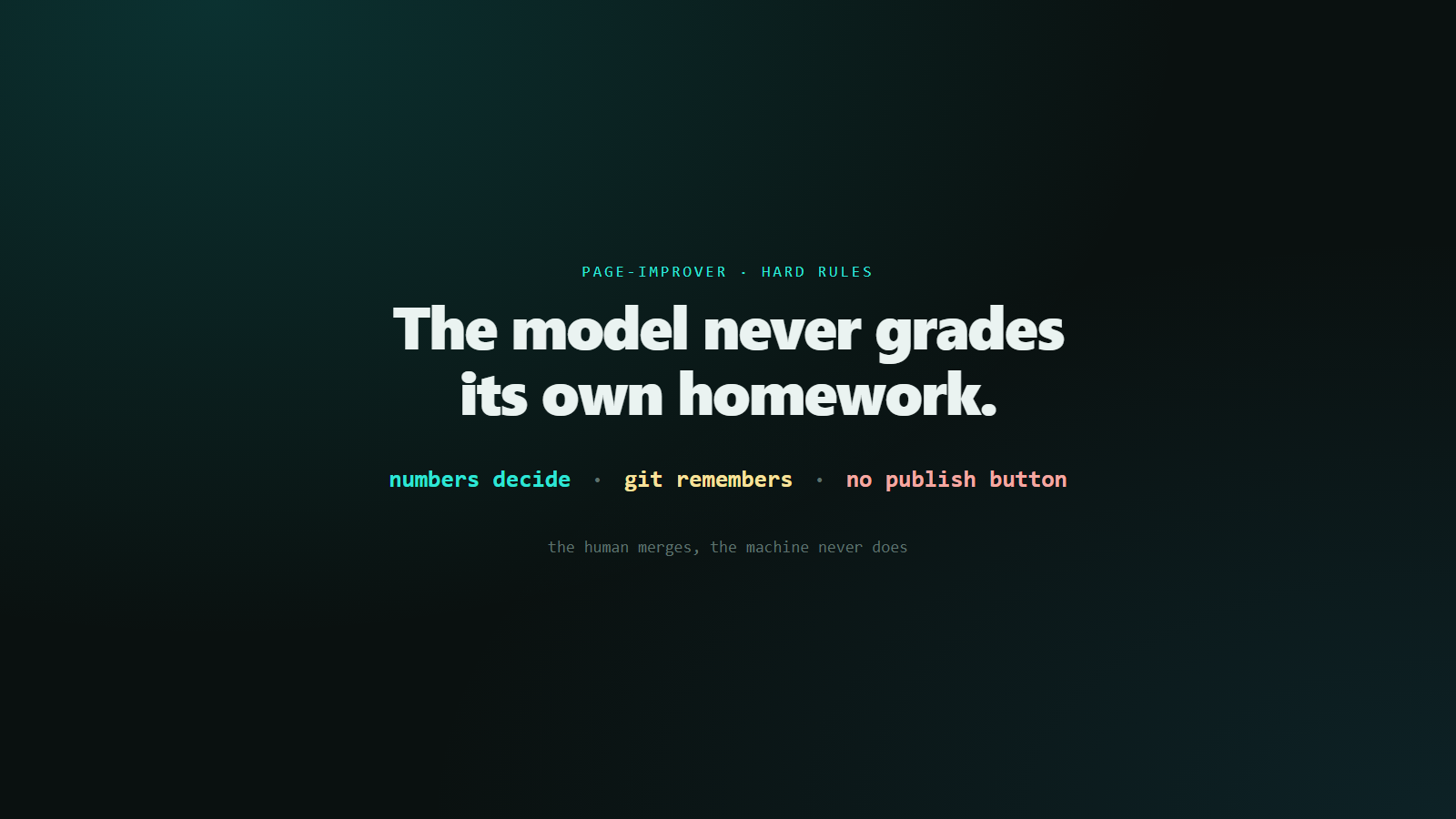
The frontier model built the checker, the small model runs it. Numbers decide, git remembers, and the human merges. The tool cannot publish, deploy, push or send anything: its whole output is a branch and a report.
One rule, two tries, the verdict after each.
The 179-rule rulebook, the Playwright + axe-core probes and the keep-or-revert runner. The repo is not published under tellingtechnology yet, so the buttons point at the org for now. Everything in this episode is free and open — clone it, run it, make it yours.
# repo soon. then: python -m improver run jobs/<name>/job.json --model qwen3.8:27b
No GitHub? Comment KEEP on the post and the bot DMs you the link.
Next, qwen3.8:27b runs chapters A to G on the Mac mini against my real resume page. Real keeps, real reverts, seconds per iteration, and my own star rating next to each model.