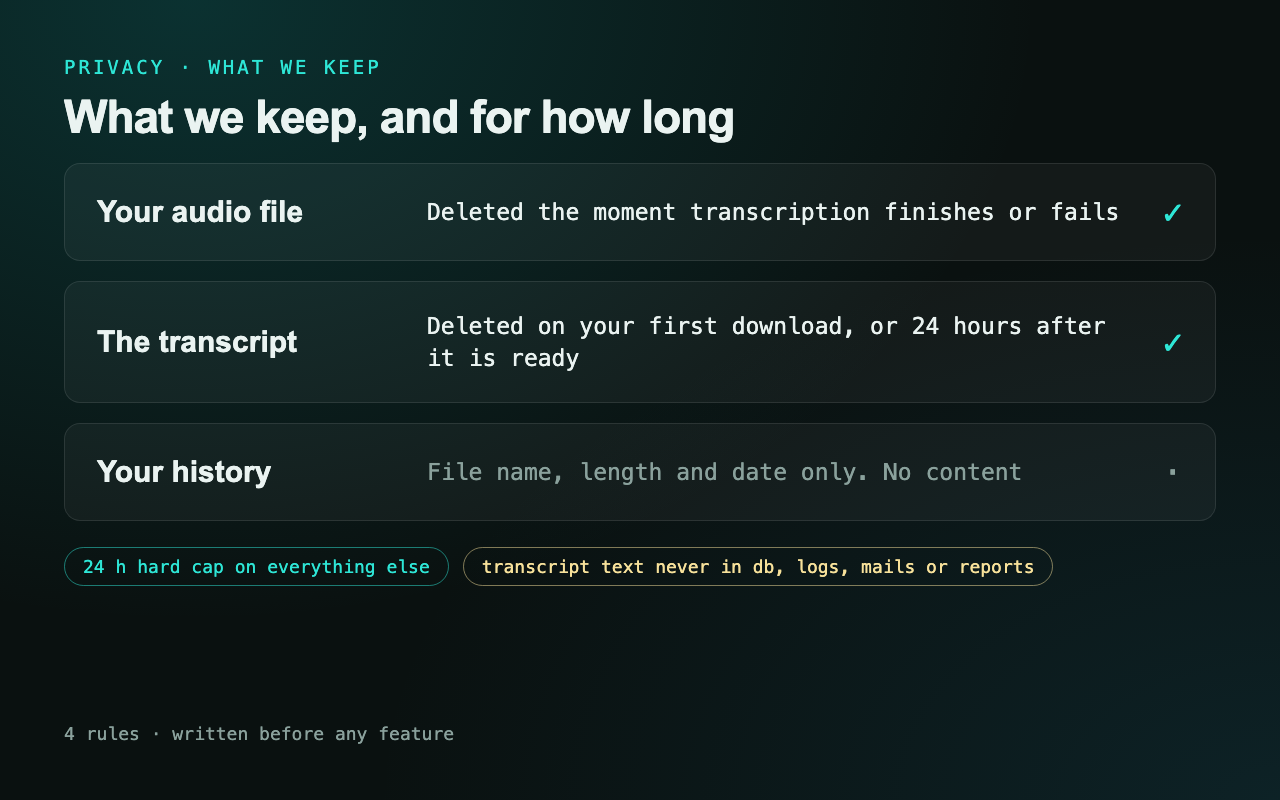
I built a paid transcription product with Claude Code in one evening. Before any feature, it got its retention rules: audio deleted when the job finishes, the transcript on your first download, a 24-hour hard cap on everything else. A privacy page can promise that. Here, a test fails if it is not true.
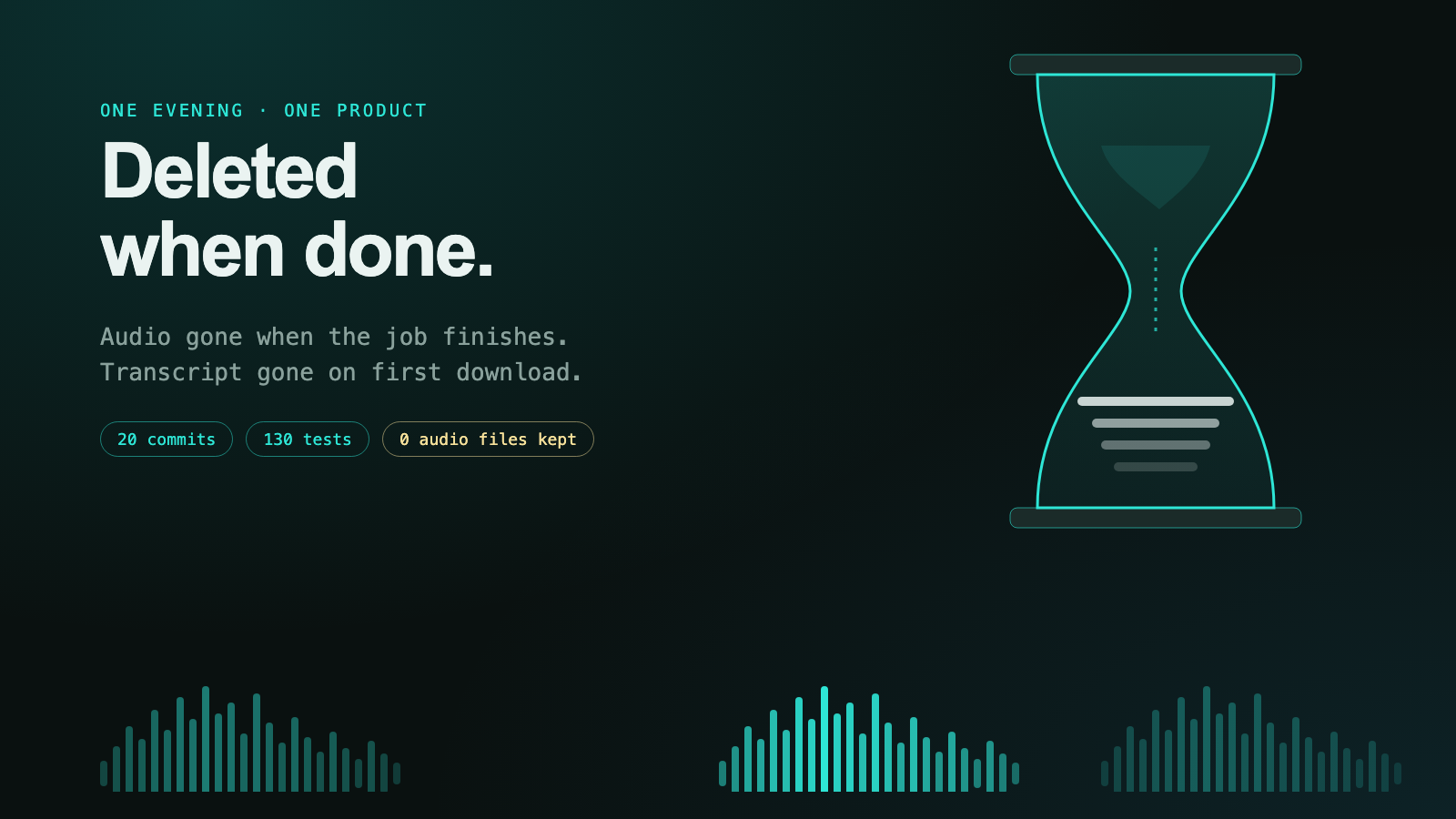
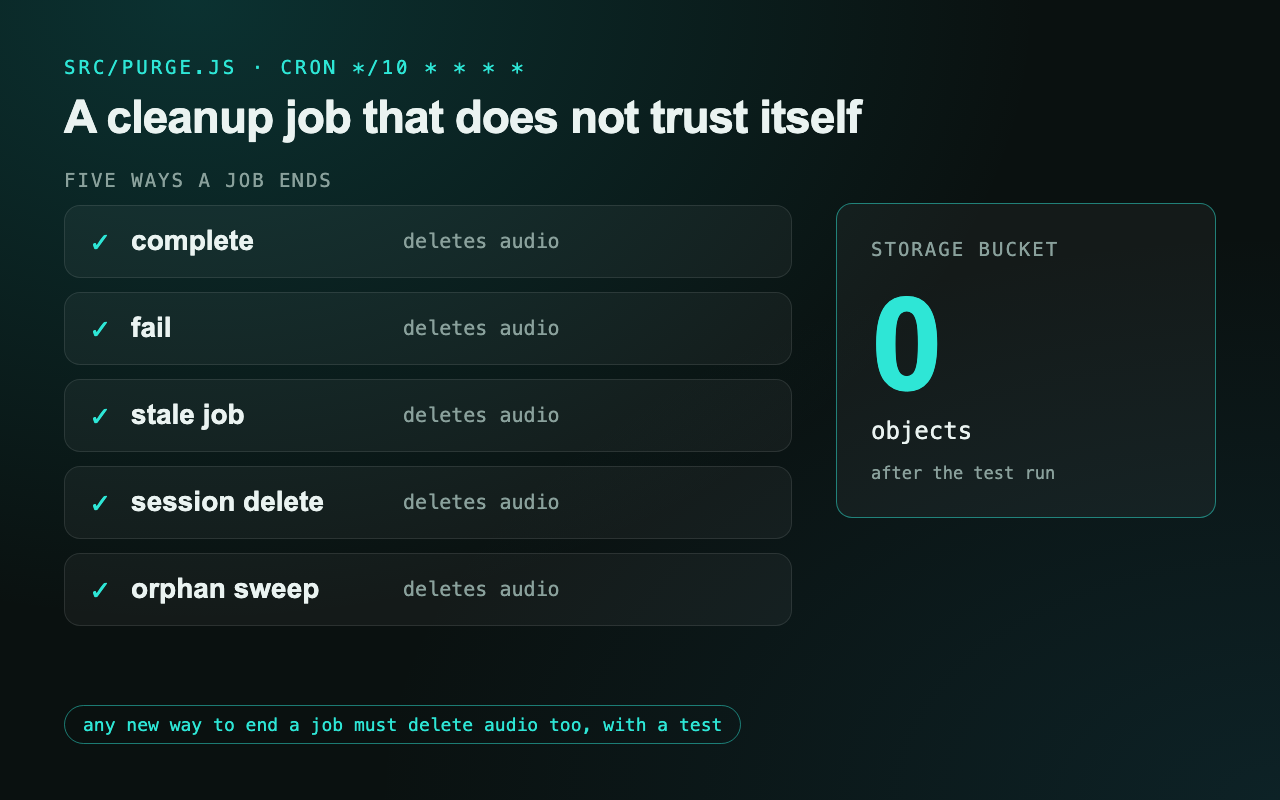
People who handle client audio, interviews, meetings, coaching calls, all have the same quiet worry about transcription services: where does my recording go afterwards? So the first thing this product got was not a feature, it was four rules. Audio is deleted the moment transcription finishes or fails. The transcript is deleted on your first download. Anything left over is gone after 24 hours. History keeps metadata only: a file name, a length, a date. Every later piece of code had to fit those four lines.
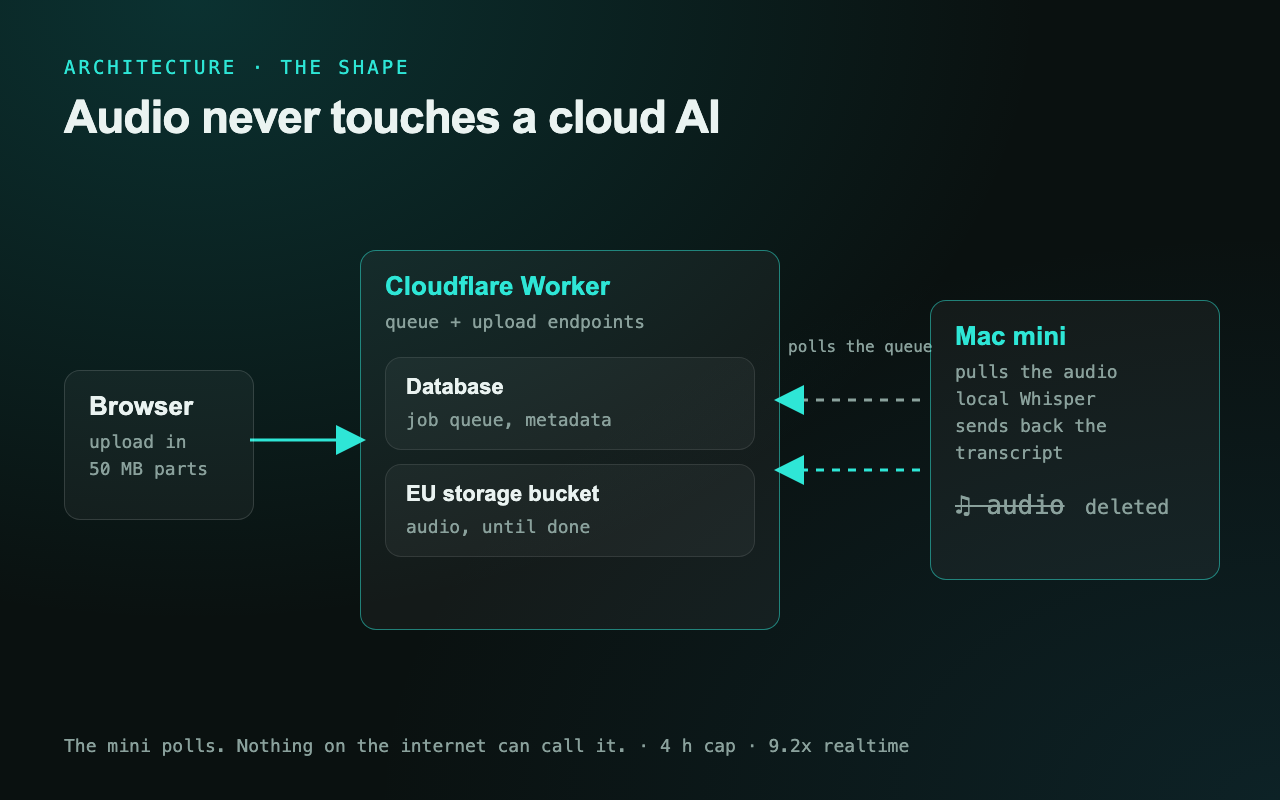
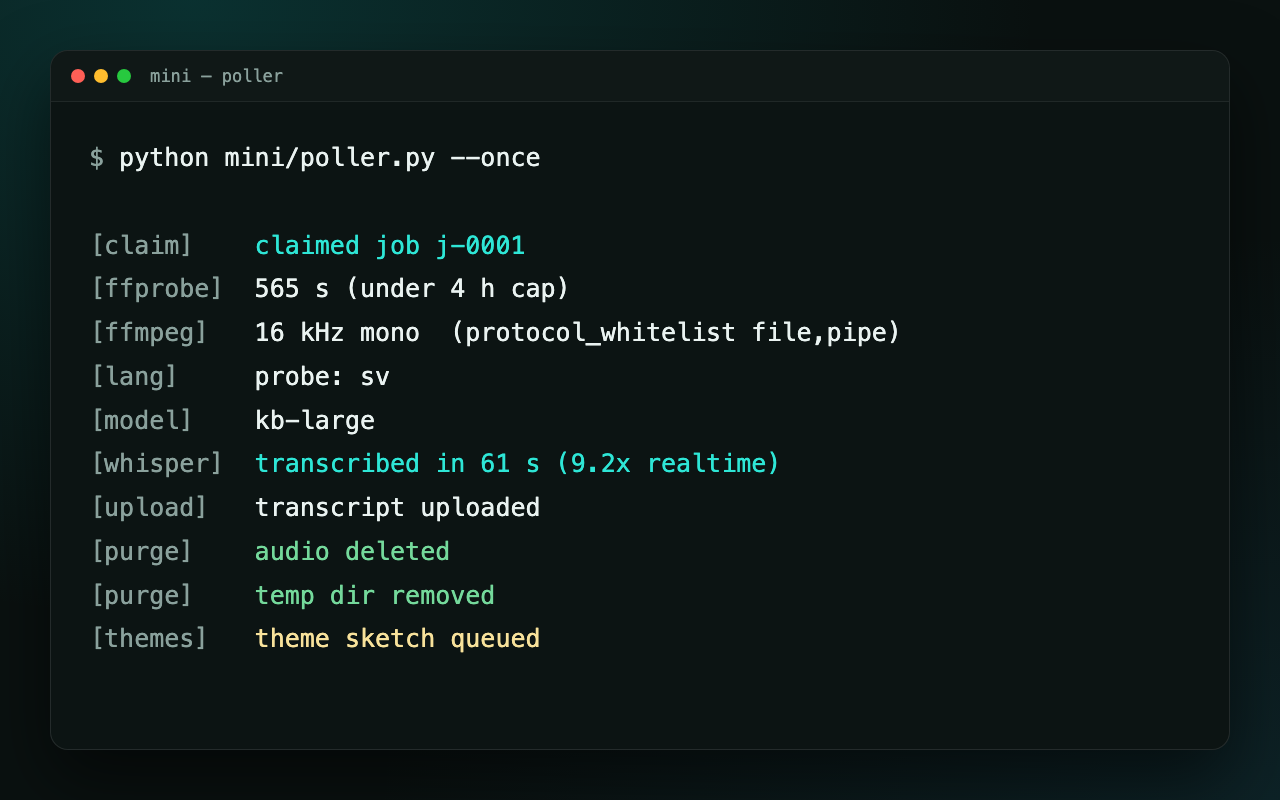
The website is a Cloudflare Worker with a small database and a storage bucket in the EU. You upload in 50 MB parts and get a place in the queue. The actual transcription happens on a Mac mini at home, which asks the queue for work instead of being reachable from the internet. It runs Whisper locally: a Swedish-tuned model for Swedish, large-v3-turbo for the rest. A 9-minute file took 61 seconds, about 9x realtime. Every file is capped at 4 hours, and ffmpeg is only allowed to read the file itself, so a booby-trapped upload cannot make it fetch anything from the web.
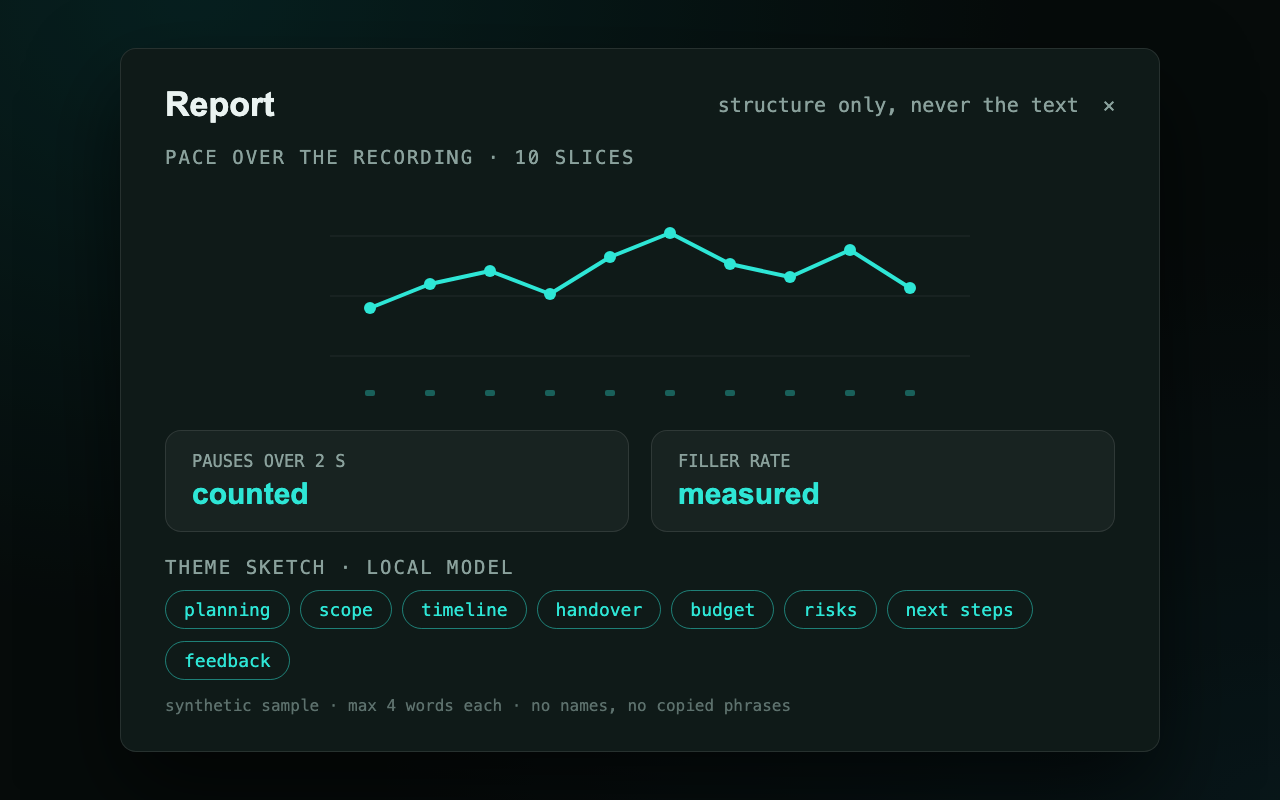
Next to the transcript you get a small report about how it was said: pace over time, pauses over two seconds, filler rate. And a theme sketch, a handful of short labels from a local language model on the same Mac mini. The labels have guards: no names from the recording, no copied three-word phrases, at most four words each. That model shares the mini’s GPU with other jobs and once took 255 seconds. So the order flipped: the transcript ships first, and the themes are merged into the report later. Nobody waits for a nice-to-have.
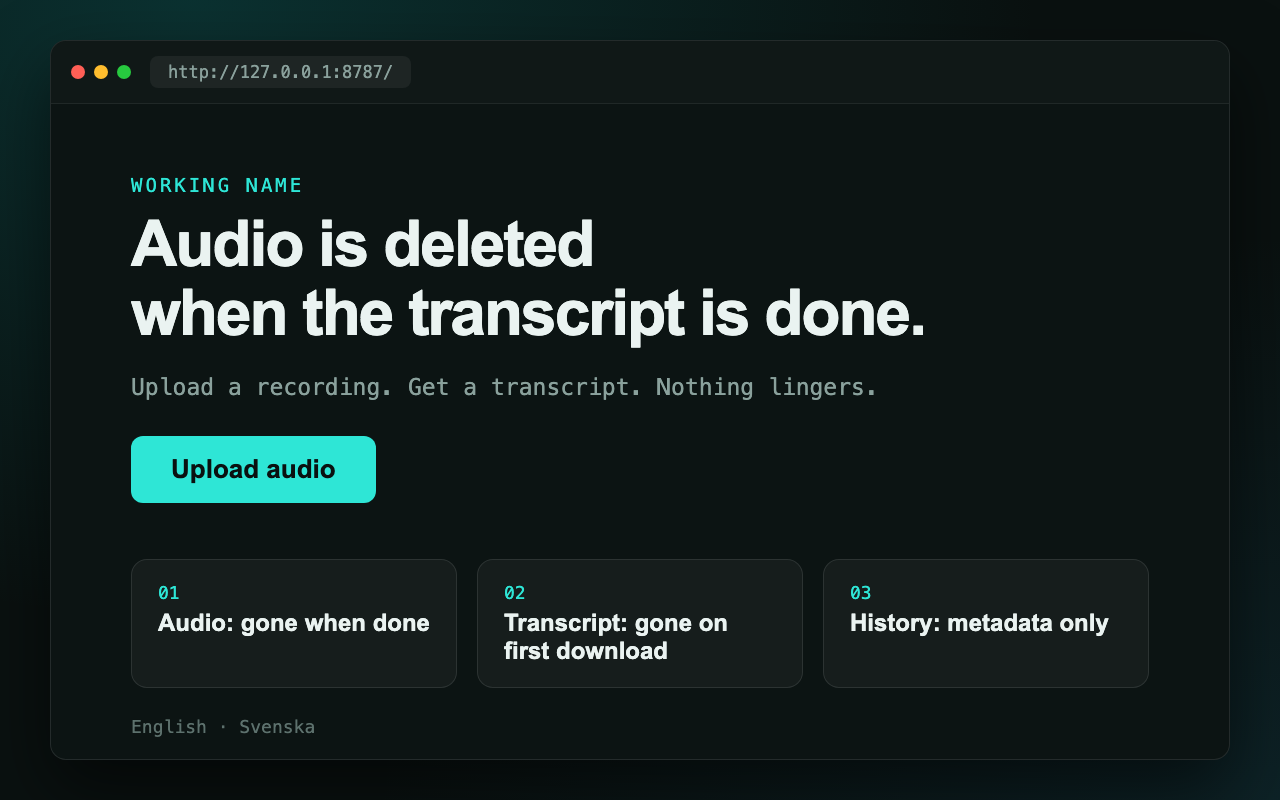
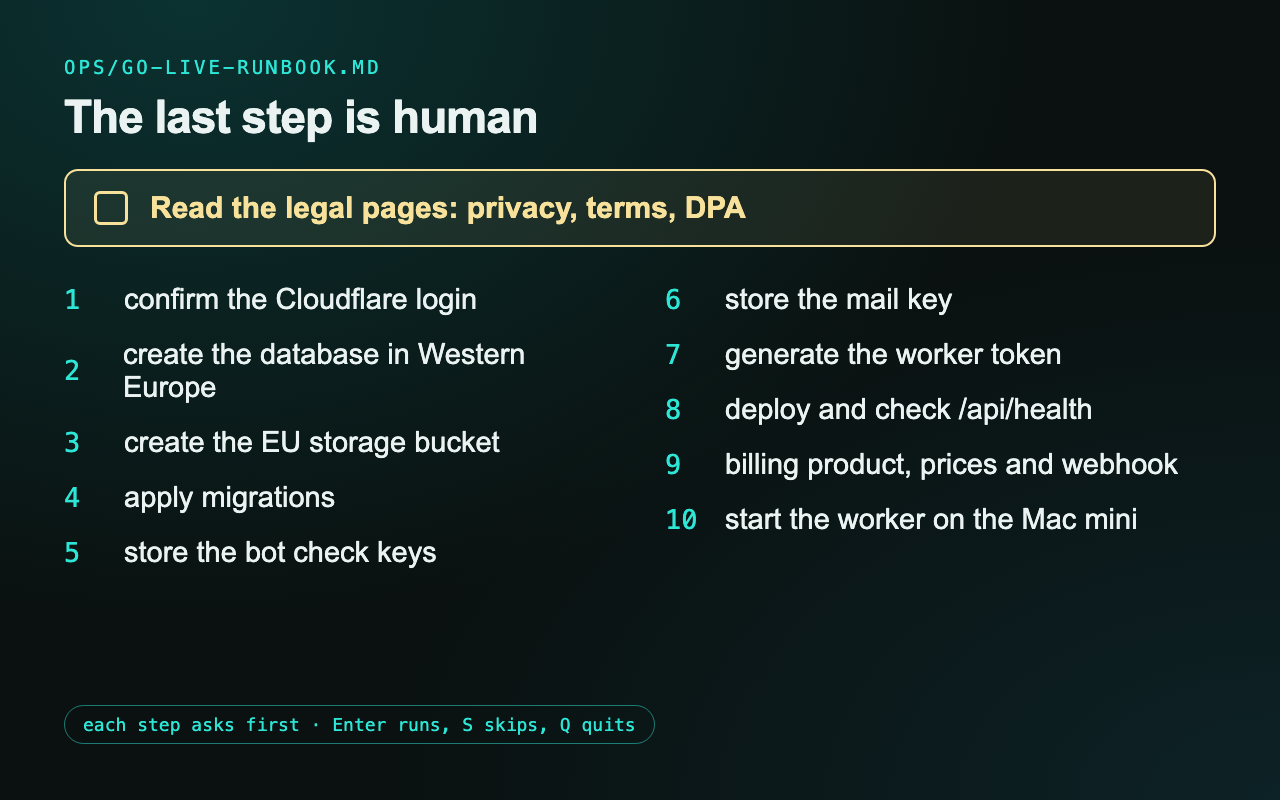
Everything in this episode is built and tested, nothing is deployed. The privacy notice, terms and data processing agreement were written from the code, and a person still has to read them before launch. The go-live is a ten-step script that asks before every step, and it is mine to run. Until then the product keeps its working name.
The transcription itself was a few hours of work. Most of the commits went into the parts nobody films: sign-in by magic link, API tokens, a cleanup job that also hunts for orphaned files, billing, account deletion and data export, legal pages that describe what the code really does. And one door built for AI: a local connector so Claude Code can send a recording and read the transcript itself. Tap any image to enlarge it and read the exact prompt that drew it.


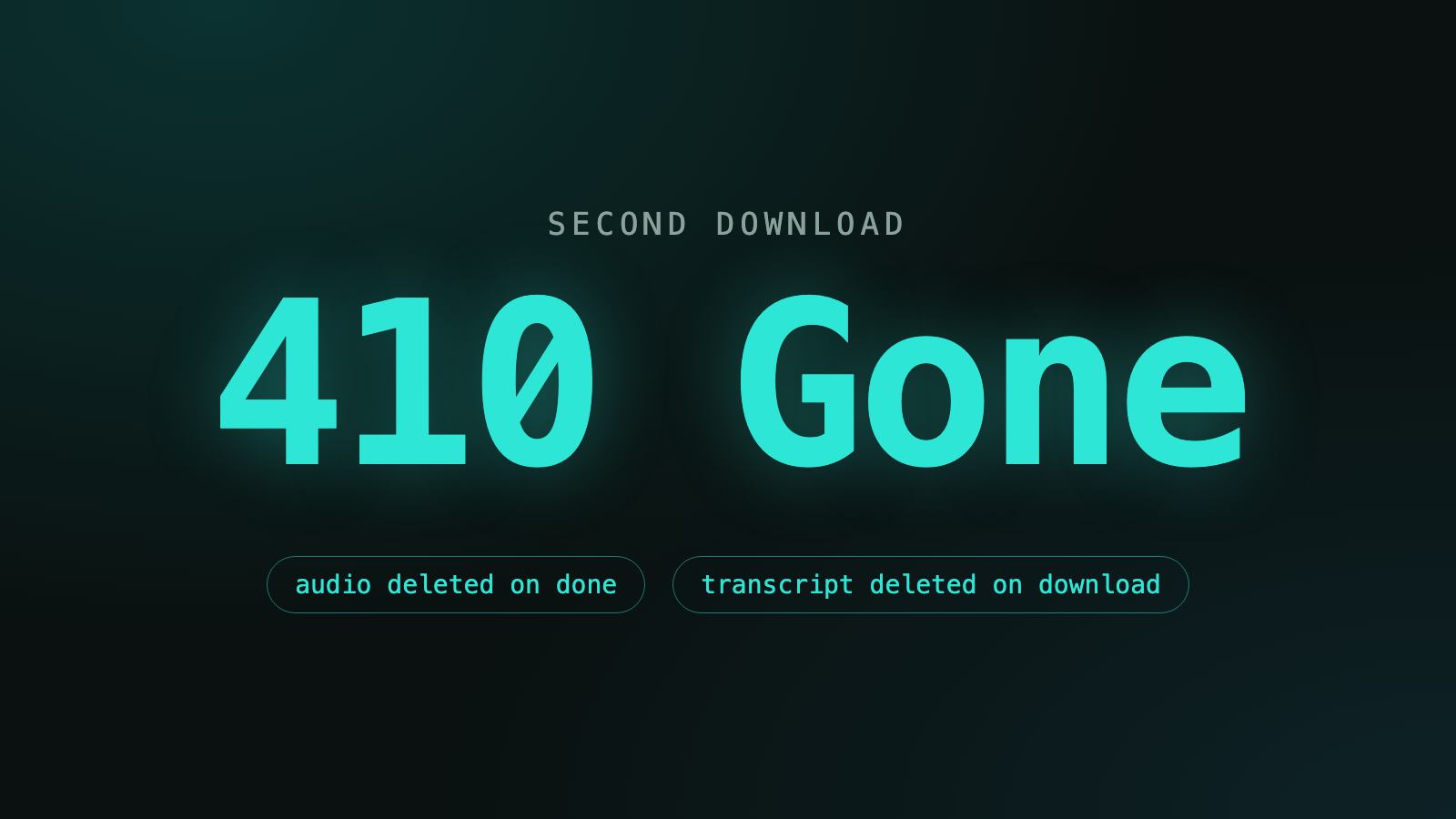
Most privacy promises live on a page nobody reads, written by someone who never saw the code. Here it runs the other way. The rules came first, the code was built to keep them, and the legal pages were written afterwards from what the code does. When I tried to download a transcript a second time, the server said it was gone. That is the whole product in one response.
The retention rules, the Mac mini doing the work, and the second download that comes back empty.
The product repo is private while it is a paid service. What I plan to share is the pattern: the retention rules, the purge job with its orphan sweep, the poller loop and the go-live runbook layout. Not published under tellingtechnology yet, so the buttons point at the org for now. Everything in this episode is free and open — clone it, run it, make it yours.
# pattern soon. the rule: every code path that ends a job deletes the audio, with a test
No GitHub? Comment FORGET on the post and the bot DMs you the link.
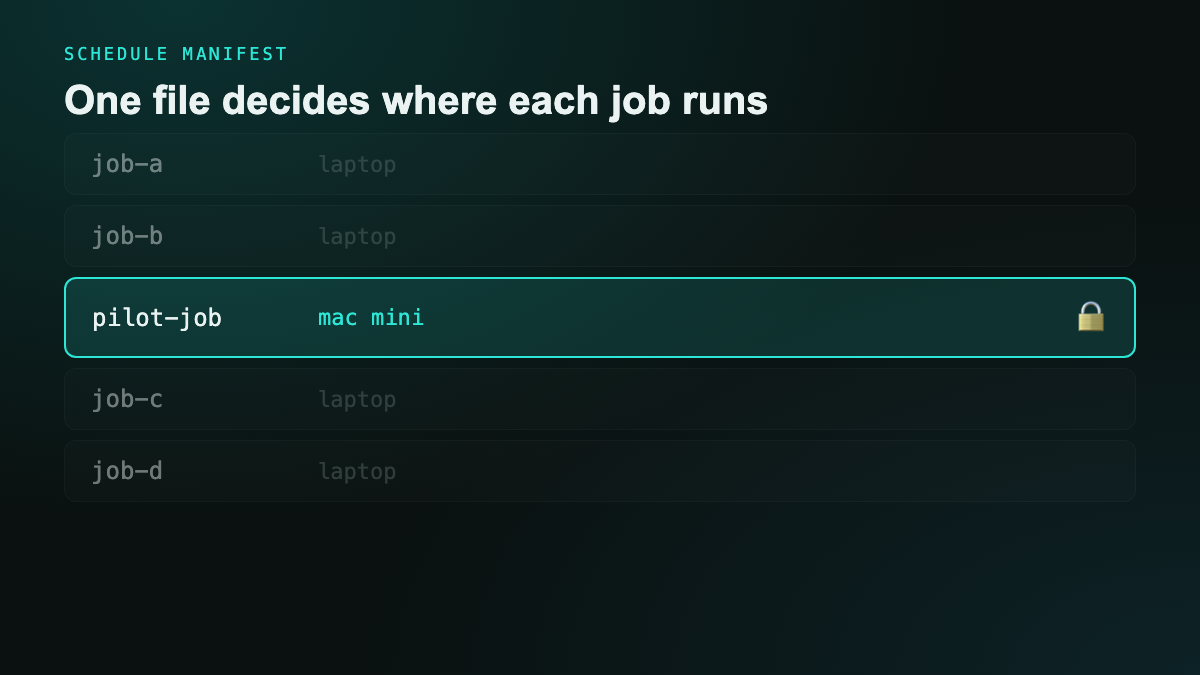
Next: one schedule file now decides which machine runs every job. The first pilot moved to the Mac mini, and then macOS refused to hand it the keys.